
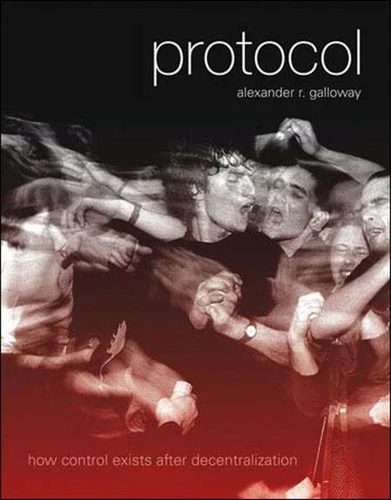
Protocol. How Control Exists after Decentralization
Par :Formats :
Disponible dans votre compte client Decitre ou Furet du Nord dès validation de votre commande. Le format ePub protégé est :
- Compatible avec une lecture sur My Vivlio (smartphone, tablette, ordinateur)
- Compatible avec une lecture sur liseuses Vivlio
- Pour les liseuses autres que Vivlio, vous devez utiliser le logiciel Adobe Digital Edition. Non compatible avec la lecture sur les liseuses Kindle, Remarkable et Sony
- Non compatible avec un achat hors France métropolitaine
 , qui est-ce ?
Notre partenaire de plateforme de lecture numérique où vous retrouverez l'ensemble de vos ebooks gratuitement
Pour en savoir plus sur nos ebooks, consultez notre aide en ligne ici
C'est si simple ! Lisez votre ebook avec l'app Vivlio sur votre tablette, mobile ou ordinateur :

- Nombre de pages288
- FormatePub
- ISBN0-262-30363-9
- EAN9780262303637
- Date de parution17/02/2006
- Protection num.Adobe DRM
- Taille2 Mo
- Infos supplémentairesepub
- ÉditeurThe MIT Press
Résumé
How Control Exists after DecentralizationIs the Internet a vast arena of unrestricted communication and freely exchanged information or a regulated, highly structured virtual bureaucracy? In Protocol, Alexander Galloway argues that the founding principle of the Net is control, not freedom, and that the controlling power lies in the technical protocols that make network connections (and disconnections) possible.
He does this by treating the computer as a textual medium that is based on a technological language, code. Code, he argues, can be subject to the same kind of cultural and literary analysis as any natural language; computer languages have their own syntax, grammar, communities, and cultures. Instead of relying on established theoretical approaches, Galloway finds a new way to write about digital media, drawing on his backgrounds in computer programming and critical theory.
"Discipline-hopping is a necessity when it comes to complicated socio-technical topics like protocol, " he writes in the preface. Galloway begins by examining the types of protocols that exist, including TCP/IP, DNS, and HTML. He then looks at examples of resistance and subversion-hackers, viruses, cyberfeminism, Internet art-which he views as emblematic of the larger transformations now taking place within digital culture.
Written for a nontechnical audience, Protocol serves as a necessary counterpoint to the wildly utopian visions of the Net that were so widespread in earlier days.
He does this by treating the computer as a textual medium that is based on a technological language, code. Code, he argues, can be subject to the same kind of cultural and literary analysis as any natural language; computer languages have their own syntax, grammar, communities, and cultures. Instead of relying on established theoretical approaches, Galloway finds a new way to write about digital media, drawing on his backgrounds in computer programming and critical theory.
"Discipline-hopping is a necessity when it comes to complicated socio-technical topics like protocol, " he writes in the preface. Galloway begins by examining the types of protocols that exist, including TCP/IP, DNS, and HTML. He then looks at examples of resistance and subversion-hackers, viruses, cyberfeminism, Internet art-which he views as emblematic of the larger transformations now taking place within digital culture.
Written for a nontechnical audience, Protocol serves as a necessary counterpoint to the wildly utopian visions of the Net that were so widespread in earlier days.