
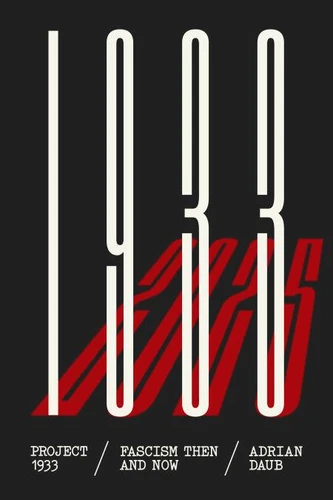
Project 1933. Fascism Then and Now
Par :Formats :
Disponible dans votre compte client Decitre ou Furet du Nord dès validation de votre commande. Le format ePub protégé est :
- Compatible avec une lecture sur My Vivlio (smartphone, tablette, ordinateur)
- Compatible avec une lecture sur liseuses Vivlio
- Pour les liseuses autres que Vivlio, vous devez utiliser le logiciel Adobe Digital Edition. Non compatible avec la lecture sur les liseuses Kindle, Remarkable et Sony
- Non compatible avec un achat hors France métropolitaine
 , qui est-ce ?
Notre partenaire de plateforme de lecture numérique où vous retrouverez l'ensemble de vos ebooks gratuitement
Pour en savoir plus sur nos ebooks, consultez notre aide en ligne ici
C'est si simple ! Lisez votre ebook avec l'app Vivlio sur votre tablette, mobile ou ordinateur :

- Nombre de pages256
- Date de parution27/04/2027
- FormatePub
- ISBN978-1-6626-0369-3
- EAN9781662603693
- Protection num.Adobe DRM
- Infos supplémentairesepub
- ÉditeurAstra House
Résumé
For readers of Jason Stanley and Timothy Snyder comes an urgent and rigorous comparison of our current political climate to that of Germany's during Hitler's first year in power. Since a new wave of far right-wing sentiment entered American political life a decade ago, political scientists and pundits have chided people for what they see as overly facile comparisons between today's Republican leadership and Nazism.
Are these comparisons just scare-mongering? Or could they tell us something useful about the state of American democracy?Using the writings of German thinkers like Thomas Mann, Victor Klemperer, Hannah Arendt, and other meticulous diarists of the era, Project 1933 retells the story of the first year of the Third Reich month-by-month, pausing to draw connections between Germany's past and America's present.
Adrian Daub deftly explores the truths of living under fascism-the grim uncertainty (and even grimmer certainty) of early days, the existential scramble to cleave to institutions that define us even as they are bent to the will of a despot, the creation of bystanders and collaborators, the shifting cultural conversations, and the day-to-day banalities. While some parallels are downright terrifying, Project 1933 aims to remind readers of the choices that are available to us, and that fascism's key magic trick is to convince us of its own inevitability.
Project 1933 shows readers a path toward a more hopeful, moral imagination and the possibility of radical change.
Are these comparisons just scare-mongering? Or could they tell us something useful about the state of American democracy?Using the writings of German thinkers like Thomas Mann, Victor Klemperer, Hannah Arendt, and other meticulous diarists of the era, Project 1933 retells the story of the first year of the Third Reich month-by-month, pausing to draw connections between Germany's past and America's present.
Adrian Daub deftly explores the truths of living under fascism-the grim uncertainty (and even grimmer certainty) of early days, the existential scramble to cleave to institutions that define us even as they are bent to the will of a despot, the creation of bystanders and collaborators, the shifting cultural conversations, and the day-to-day banalities. While some parallels are downright terrifying, Project 1933 aims to remind readers of the choices that are available to us, and that fascism's key magic trick is to convince us of its own inevitability.
Project 1933 shows readers a path toward a more hopeful, moral imagination and the possibility of radical change.