SOLDES
Jusqu'à -70% sur une sélection d'articles*

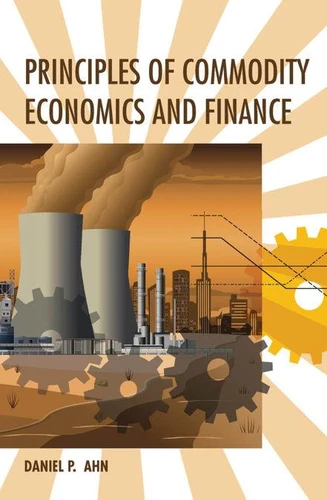
Principles of Commodity Economics and Finance
Par :Formats :
Disponible dans votre compte client Decitre ou Furet du Nord dès validation de votre commande. Le format ePub protégé est :
- Compatible avec une lecture sur My Vivlio (smartphone, tablette, ordinateur)
- Compatible avec une lecture sur liseuses Vivlio
- Pour les liseuses autres que Vivlio, vous devez utiliser le logiciel Adobe Digital Edition. Non compatible avec la lecture sur les liseuses Kindle, Remarkable et Sony
- Non compatible avec un achat hors France métropolitaine
 , qui est-ce ?
Notre partenaire de plateforme de lecture numérique où vous retrouverez l'ensemble de vos ebooks gratuitement
Pour en savoir plus sur nos ebooks, consultez notre aide en ligne ici
C'est si simple ! Lisez votre ebook avec l'app Vivlio sur votre tablette, mobile ou ordinateur :

- Nombre de pages232
- FormatePub
- ISBN978-0-262-34788-4
- EAN9780262347884
- Date de parution09/04/2019
- Protection num.Adobe DRM
- Taille6 Mo
- Infos supplémentairesepub
- ÉditeurThe MIT Press
Résumé
A rigorous but practical introduction to the economic, financial, and political principles underlying commodity markets. Commodities have become one of the fastest growing asset classes of the last decade and the object of increasing attention from investors, scholars, and policy makers. Yet existing treatments of the topic are either too theoretical, ignoring practical realities, or largely narrative and nonrigorous.
This book bridges the gap, striking a balance between theory and practice. It offers a solid foundation in the economic, financial, and political principles underlying commodities markets. The book, which grows out of courses taught by the author at Columbia and Johns Hopkins, can be used by graduate students in economics, finance, and public policy, or as a conceptual reference for practitioners.
After an introduction to basic concepts and a review of the various types of commodities-energy, metals, agricultural products-the book delves into the economic and financial dynamics of commodity markets, with a particular focus on energy. The text covers fundamental demand and supply for resources, the mechanics behind commodity financial markets, and how they motivate investment decisions around both physical and financial portfolio exposure to commodities, and the evolving political and regulatory landscape for commodity markets.
Additional special topics include geopolitics, financial regulation, and electricity markets. The book is divided into thematic modules that progress in complexity. Text boxes offer additional, related material, and numerous charts and graphs provide further insight into important concepts.
This book bridges the gap, striking a balance between theory and practice. It offers a solid foundation in the economic, financial, and political principles underlying commodities markets. The book, which grows out of courses taught by the author at Columbia and Johns Hopkins, can be used by graduate students in economics, finance, and public policy, or as a conceptual reference for practitioners.
After an introduction to basic concepts and a review of the various types of commodities-energy, metals, agricultural products-the book delves into the economic and financial dynamics of commodity markets, with a particular focus on energy. The text covers fundamental demand and supply for resources, the mechanics behind commodity financial markets, and how they motivate investment decisions around both physical and financial portfolio exposure to commodities, and the evolving political and regulatory landscape for commodity markets.
Additional special topics include geopolitics, financial regulation, and electricity markets. The book is divided into thematic modules that progress in complexity. Text boxes offer additional, related material, and numerous charts and graphs provide further insight into important concepts.