
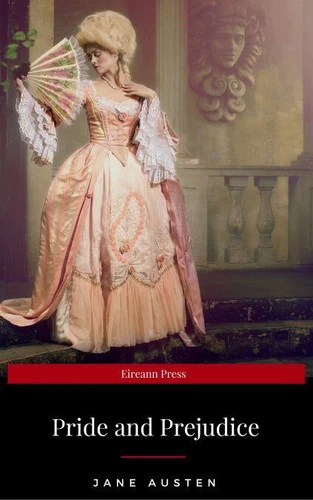
Pride and Prejudice (Eireann Press)
Par :Formats :
Disponible dans votre compte client Decitre ou Furet du Nord dès validation de votre commande. Le format ePub est :
- Compatible avec une lecture sur My Vivlio (smartphone, tablette, ordinateur)
- Compatible avec une lecture sur liseuses Vivlio
- Pour les liseuses autres que Vivlio, vous devez utiliser le logiciel Adobe Digital Edition. Non compatible avec la lecture sur les liseuses Kindle, Remarkable et Sony
 , qui est-ce ?
Notre partenaire de plateforme de lecture numérique où vous retrouverez l'ensemble de vos ebooks gratuitement
Pour en savoir plus sur nos ebooks, consultez notre aide en ligne ici
C'est si simple ! Lisez votre ebook avec l'app Vivlio sur votre tablette, mobile ou ordinateur :

- Nombre de pages15
- FormatePub
- ISBN978-2-37898-120-4
- EAN9782378981204
- Date de parution18/01/2018
- Protection num.Digital Watermarking
- Taille731 Ko
- Infos supplémentairesepub
- ÉditeurJovian Press
Résumé
Pride and Prejudice is a romance novel by Jane Austen, first published in 1813. The story charts the emotional development of the protagonist, Elizabeth Bennet, who learns the error of making hasty judgments and comes to appreciate the difference between the superficial and the essential. The comedy of the writing lies in the depiction of manners, education, marriage, and money during the British Regency period.
Mr.
Bennet of the Longbourn estate has five daughters, but his property is entailed, meaning that none of the girls can inherit it. His wife has no fortune, so it is imperative that at least one of the girls marry well in order to support the others on his death. Jane Austen's opening line, "It is a truth universally acknowledged that a single man in possession of a good fortune must be in want of a wife" is a sentence filled with irony and playfulness.
The novel revolves around the importance of marrying for love, not simply for money, despite the social pressures to make a good (i.e. wealthy) match.
Bennet of the Longbourn estate has five daughters, but his property is entailed, meaning that none of the girls can inherit it. His wife has no fortune, so it is imperative that at least one of the girls marry well in order to support the others on his death. Jane Austen's opening line, "It is a truth universally acknowledged that a single man in possession of a good fortune must be in want of a wife" is a sentence filled with irony and playfulness.
The novel revolves around the importance of marrying for love, not simply for money, despite the social pressures to make a good (i.e. wealthy) match.
A propos de Jane Austen
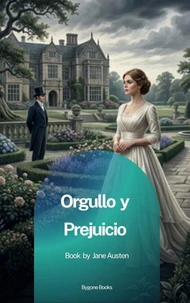
Orgullo y Prejuicio
E-book
0,99 €


Sense and Sensibility
E-book
2,99 €
Persuasion
E-book
2,99 €
Northanger Abbey
E-book
2,99 €
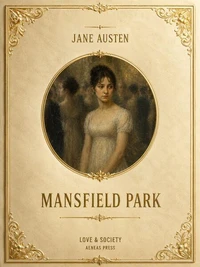
Mansfield Park
E-book
2,99 €
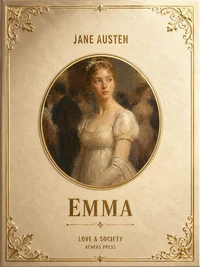
Emma
E-book
2,99 €

0,99 €
0,99 €