Standing silently on city corners, fire hydrants represent the ultimate pressurized fail-safe of urban safety. In regions that experience freezing temperatures, these heavy cast-iron pillars harbor a brilliant thermodynamic secret: they are completely empty.
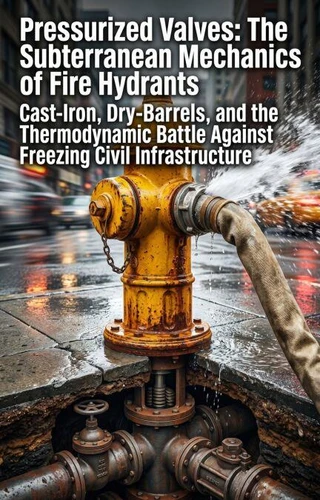
To prevent water from freezing and violently expanding-which would shatter the metal casing-engineers developed the dry-barrel hydrant. The actual valve controlling the pressurized municipal water supply is buried deep underground, safely below the frost line.
When a firefighter turns the operating nut at the top, a long stem opens the subterranean valve, sending hundreds of gallons per minute surging to the surface. When closed, a specialized drain valve automatically clears the remaining water from the vertical pipe.
If this draining mechanism clogs with sediment, the next winter freeze transforms the hydrant into a useless, fractured block of ice.
Routine municipal maintenance is therefore a frantic race against seasonal thermodynamics.
Deconstructing this critical apparatus exposes the grueling civil engineering required to maintain instant access to high-volume aquatic ammunition during catastrophic urban fires.
Standing silently on city corners, fire hydrants represent the ultimate pressurized fail-safe of urban safety. In regions that experience freezing temperatures, these heavy cast-iron pillars harbor a brilliant thermodynamic secret: they are completely empty.
To prevent water from freezing and violently expanding-which would shatter the metal casing-engineers developed the dry-barrel hydrant. The actual valve controlling the pressurized municipal water supply is buried deep underground, safely below the frost line.
When a firefighter turns the operating nut at the top, a long stem opens the subterranean valve, sending hundreds of gallons per minute surging to the surface. When closed, a specialized drain valve automatically clears the remaining water from the vertical pipe.
If this draining mechanism clogs with sediment, the next winter freeze transforms the hydrant into a useless, fractured block of ice.
Routine municipal maintenance is therefore a frantic race against seasonal thermodynamics.
Deconstructing this critical apparatus exposes the grueling civil engineering required to maintain instant access to high-volume aquatic ammunition during catastrophic urban fires.


 , qui est-ce ?



