
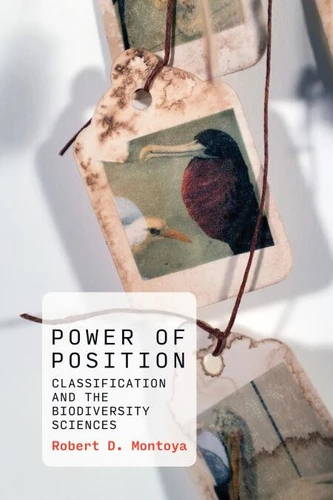
Power of Position. Classification and the Biodiversity Sciences
Par :Formats :
Disponible dans votre compte client Decitre ou Furet du Nord dès validation de votre commande. Le format ePub protégé est :
- Compatible avec une lecture sur My Vivlio (smartphone, tablette, ordinateur)
- Compatible avec une lecture sur liseuses Vivlio
- Pour les liseuses autres que Vivlio, vous devez utiliser le logiciel Adobe Digital Edition. Non compatible avec la lecture sur les liseuses Kindle, Remarkable et Sony
- Non compatible avec un achat hors France métropolitaine
 , qui est-ce ?
Notre partenaire de plateforme de lecture numérique où vous retrouverez l'ensemble de vos ebooks gratuitement
Pour en savoir plus sur nos ebooks, consultez notre aide en ligne ici
C'est si simple ! Lisez votre ebook avec l'app Vivlio sur votre tablette, mobile ou ordinateur :

- Nombre de pages272
- FormatePub
- ISBN978-0-262-36218-4
- EAN9780262362184
- Date de parution24/05/2022
- Protection num.Adobe DRM
- Taille5 Mo
- Infos supplémentairesepub
- ÉditeurThe MIT Press
Résumé
How biodiversity classification, with its ranking of species, has social and political implications as well as implications for the field of information studies. The idea that species live in nature as pure and clear-cut named individuals is a fiction, as scientists well know. According to Robert D. Montoya, classifications are powerful mechanisms and we must better attend to the machinations of power inherent in them, as well as to how the effects of this power proliferate beyond the boundaries of their original intent.
We must acknowledge the many ways our classifications are implicated in environmental, ecological, and social justice work-and information specialists must play a role in updating our notions of what it means to classify. In Power of Position, Montoya shows how classifications are systems that relate one entity with other entities, requiring those who construct a system to value an entity's relative importance-by way of its position-within a system of other entities.
These practices, says Montoya, are important ways of constituting and exerting power. Classification also has very real-world consequences. An animal classified as protected and endangered, for example, is protected by law. Montoya also discusses the Catalogue of Life, a new kind of composite classification that reconciles many local ("traditional") taxonomies, forming a unified taxonomic backbone structure for organizing biological data.
Finally, he shows how the theories of information studies are applicable to realms far beyond those of biological classification.
We must acknowledge the many ways our classifications are implicated in environmental, ecological, and social justice work-and information specialists must play a role in updating our notions of what it means to classify. In Power of Position, Montoya shows how classifications are systems that relate one entity with other entities, requiring those who construct a system to value an entity's relative importance-by way of its position-within a system of other entities.
These practices, says Montoya, are important ways of constituting and exerting power. Classification also has very real-world consequences. An animal classified as protected and endangered, for example, is protected by law. Montoya also discusses the Catalogue of Life, a new kind of composite classification that reconciles many local ("traditional") taxonomies, forming a unified taxonomic backbone structure for organizing biological data.
Finally, he shows how the theories of information studies are applicable to realms far beyond those of biological classification.