SOLDES
Jusqu'à -70% sur une sélection d'articles*

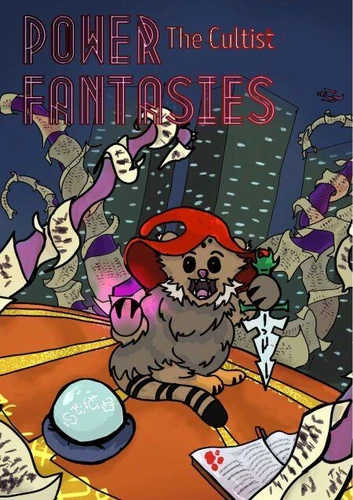
Power Fantasies: Cultist. Power Fantasies, #1
Par : , ,Formats :
Disponible dans votre compte client Decitre ou Furet du Nord dès validation de votre commande. Le format ePub est :
- Compatible avec une lecture sur My Vivlio (smartphone, tablette, ordinateur)
- Compatible avec une lecture sur liseuses Vivlio
- Pour les liseuses autres que Vivlio, vous devez utiliser le logiciel Adobe Digital Edition. Non compatible avec la lecture sur les liseuses Kindle, Remarkable et Sony
 , qui est-ce ?
Notre partenaire de plateforme de lecture numérique où vous retrouverez l'ensemble de vos ebooks gratuitement
Pour en savoir plus sur nos ebooks, consultez notre aide en ligne ici
C'est si simple ! Lisez votre ebook avec l'app Vivlio sur votre tablette, mobile ou ordinateur :

- FormatePub
- ISBN8231816439
- EAN9798231816439
- Date de parution17/07/2025
- Protection num.pas de protection
- Infos supplémentairesepub
- ÉditeurWalzone Press
Résumé
Three years ago, Lhuzie and Brad started to write and distribute essays and critiques about tabletop roleplaying games. They felt these games and their medium of cooperative collaborative storytelling suffered from a lack of scholarship and useful critique shaped by useful frameworks rather than vibes. Despite their academic experience being in different cultural and scientific fields, they have accepted failure as a given: sure, they could be bad at it, but they would give it a try.
They were doing it because nobody was doing critique - it was all hype-building FOMO, product reviews, or advertisinterviews that treated authorial claims and intent as gospel. With all hope, a thousand frameworks of critique would bloom and someone would eventually do critique well. So Split/Party began using its frameworkIn Power Fantasy: The Cultist we follow the first year of Split/Party's publication - their fumbles and successes as they test the viability of their framework, try to find their identity as critiques, and develop their own art and craft as writers and analysts.
It culminates with the first of their essays on Power Fantasies - looking into the technologies of power of biopolitics, necropolitics and psychopolitics and see which fantasies are okay to have and how they influence roleplaying games. This anthology offers a slice of the best indie roleplaying could offer: the cozy Ghibli-likes, anti-neonliberal cyberpunk, epic fantasies, community building and mutual resistance, vampire-slaying revolution, playful inversion of the monster-hunting tropes with communist veterinarians, and the epic highs and lows of high school dogfighting.
Working and playing through these, they made themselves "sad". They had started to believe Greg Stafford had "fucked them over" personally. It made them very very very smart girls, building a precise model of this grotesque, duplicitous "industry" and "community". The essays started coming out: on how Kickstarter and similar platforms are parasitic on creators and their supporters and will always rush to embrace anti-labor practices such as crypto, NFTs (remember those?) and LLMs, the dangers of lore-fication for storytelling and how to develop anti-lore sensibilities through social knowledge, the problematic of authority in roleplaying games, the formation of identities and personhood through storytelling and the intersection with plurarity, and the urban spaces of our collective stories.
Finally, with the Power Fantasy of the Cultist, they truly became Split/Party.
They were doing it because nobody was doing critique - it was all hype-building FOMO, product reviews, or advertisinterviews that treated authorial claims and intent as gospel. With all hope, a thousand frameworks of critique would bloom and someone would eventually do critique well. So Split/Party began using its frameworkIn Power Fantasy: The Cultist we follow the first year of Split/Party's publication - their fumbles and successes as they test the viability of their framework, try to find their identity as critiques, and develop their own art and craft as writers and analysts.
It culminates with the first of their essays on Power Fantasies - looking into the technologies of power of biopolitics, necropolitics and psychopolitics and see which fantasies are okay to have and how they influence roleplaying games. This anthology offers a slice of the best indie roleplaying could offer: the cozy Ghibli-likes, anti-neonliberal cyberpunk, epic fantasies, community building and mutual resistance, vampire-slaying revolution, playful inversion of the monster-hunting tropes with communist veterinarians, and the epic highs and lows of high school dogfighting.
Working and playing through these, they made themselves "sad". They had started to believe Greg Stafford had "fucked them over" personally. It made them very very very smart girls, building a precise model of this grotesque, duplicitous "industry" and "community". The essays started coming out: on how Kickstarter and similar platforms are parasitic on creators and their supporters and will always rush to embrace anti-labor practices such as crypto, NFTs (remember those?) and LLMs, the dangers of lore-fication for storytelling and how to develop anti-lore sensibilities through social knowledge, the problematic of authority in roleplaying games, the formation of identities and personhood through storytelling and the intersection with plurarity, and the urban spaces of our collective stories.
Finally, with the Power Fantasy of the Cultist, they truly became Split/Party.