SOLDES
Jusqu'à -70% sur une sélection d'articles*

Nouveauté
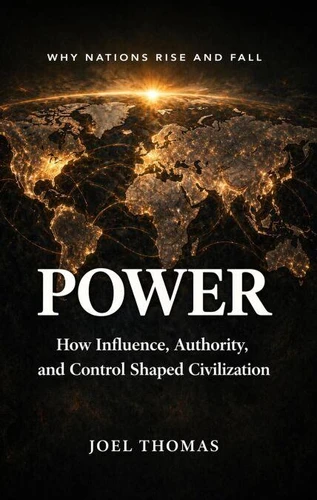
Power
Par :Formats :
Disponible dans votre compte client Decitre ou Furet du Nord dès validation de votre commande. Le format ePub est :
- Compatible avec une lecture sur My Vivlio (smartphone, tablette, ordinateur)
- Compatible avec une lecture sur liseuses Vivlio
- Pour les liseuses autres que Vivlio, vous devez utiliser le logiciel Adobe Digital Edition. Non compatible avec la lecture sur les liseuses Kindle, Remarkable et Sony
 , qui est-ce ?
Notre partenaire de plateforme de lecture numérique où vous retrouverez l'ensemble de vos ebooks gratuitement
Pour en savoir plus sur nos ebooks, consultez notre aide en ligne ici
C'est si simple ! Lisez votre ebook avec l'app Vivlio sur votre tablette, mobile ou ordinateur :

- FormatePub
- ISBN978-1-972041-09-3
- EAN9781972041093
- Date de parution15/05/2026
- Protection num.pas de protection
- Infos supplémentairesepub
- ÉditeurJoel Thomas
Résumé
Power is not held. It is structured. Most people think power lives in leaders: presidents, generals, kings, executives, and revolutionaries. They are wrong. Power lives in systems. In Power: How Influence, Authority, and Control Shaped Civilization, Joel Thomas examines power not as a personality trait, moral virtue, or political slogan, but as a structural force that determines how societies are built, governed, stabilized, challenged, and eventually transformed.
Across history, civilizations rise and fall not simply because of great leaders or decisive battles, but because power organizes itself through recurring mechanisms: authority, coercion, legitimacy, wealth, information, institutions, culture, technology, fear, and consent. This book reveals the hidden architecture behind those mechanisms. Inside, you will examine: why authority is cheaper and more durable than force how institutions outlive the people who create them why legitimacy is one of power's greatest force multipliers how economic, military, political, cultural, and technological power convert into one another why systems resist reform even after their failures become obvious how power hides in rules, routines, incentives, traditions, and accepted assumptions Drawing from political theory, history, sociology, and institutional analysis, Power follows the structural patterns that have shaped human civilization from pre-state societies and sacred kingship to empires, bureaucracies, markets, mass movements, and modern systems of control.
This is not a leadership book. It is not a motivational argument. It is not a simple history of rulers and wars. It is a diagnostic framework for understanding how power actually works. If you want to understand why civilizations rise, why institutions endure, why control is often invisible, and why meaningful change is harder than it appears, this book provides the machinery behind the surface of history.
Across history, civilizations rise and fall not simply because of great leaders or decisive battles, but because power organizes itself through recurring mechanisms: authority, coercion, legitimacy, wealth, information, institutions, culture, technology, fear, and consent. This book reveals the hidden architecture behind those mechanisms. Inside, you will examine: why authority is cheaper and more durable than force how institutions outlive the people who create them why legitimacy is one of power's greatest force multipliers how economic, military, political, cultural, and technological power convert into one another why systems resist reform even after their failures become obvious how power hides in rules, routines, incentives, traditions, and accepted assumptions Drawing from political theory, history, sociology, and institutional analysis, Power follows the structural patterns that have shaped human civilization from pre-state societies and sacred kingship to empires, bureaucracies, markets, mass movements, and modern systems of control.
This is not a leadership book. It is not a motivational argument. It is not a simple history of rulers and wars. It is a diagnostic framework for understanding how power actually works. If you want to understand why civilizations rise, why institutions endure, why control is often invisible, and why meaningful change is harder than it appears, this book provides the machinery behind the surface of history.