SOLDES
Jusqu'à -70% sur une sélection d'articles*

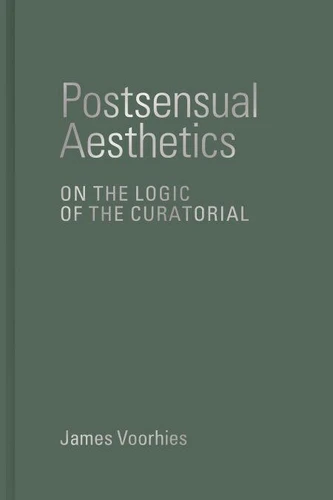
Postsensual Aesthetics
Par :Formats :
Disponible dans votre compte client Decitre ou Furet du Nord dès validation de votre commande. Le format ePub protégé est :
- Compatible avec une lecture sur My Vivlio (smartphone, tablette, ordinateur)
- Compatible avec une lecture sur liseuses Vivlio
- Pour les liseuses autres que Vivlio, vous devez utiliser le logiciel Adobe Digital Edition. Non compatible avec la lecture sur les liseuses Kindle, Remarkable et Sony
- Non compatible avec un achat hors France métropolitaine
 , qui est-ce ?
Notre partenaire de plateforme de lecture numérique où vous retrouverez l'ensemble de vos ebooks gratuitement
Pour en savoir plus sur nos ebooks, consultez notre aide en ligne ici
C'est si simple ! Lisez votre ebook avec l'app Vivlio sur votre tablette, mobile ou ordinateur :

- Nombre de pages152
- FormatePub
- ISBN978-0-262-37284-8
- EAN9780262372848
- Date de parution21/02/2023
- Protection num.Adobe DRM
- Taille243 Ko
- Infos supplémentairesepub
- ÉditeurThe MIT Press
Résumé
Contemporary art exhibitions appeal to cognition as well as the senses, modeling a new and expansive understanding of global aesthetics. In this original work of aesthetic theory, James Voorhies argues that we live in the shadow of old ways of thinking about art that emphasize the immediate visual experience of an autonomous art object. But theory must change as artistic and curatorial production has changed.
It should encompass the full range of activities through which we encounter art and exhibitions, in which reading and thinking are central to the aesthetic experience. Voorhies advances the theoretical framework of a "postsensual aesthetics, " which does not mean we are beyond a sensual engagement with objects, but rather embraces the cognitive connections with ideas that unite art and knowledge production.
Cognitive engagements with art often begin with publications conceived as integral to exhibitions, conveying the knowledge and research artists and curators produce, and continuing in time and space beyond traditional curatorial frames. The idea, and not just visual immediacy, is now art's defining moment. Voorhies reframes aesthetic criteria to account for the liminal, cognitive spaces inside and outside of the exhibition.
Surveying a wide range of artists, curators, exhibitions, and related publications, he repositions the aesthetic theory of Theodor Adorno, and draws inspiration from Rosalind Krauss and Fredric Jameson, to describe a contemporary "logic of the curatorial." He demonstrates how, even as we increasingly expect to learn from contemporary art, we must avoid an instrumentalist and reductive view of art as a mere source of information.
As Voorhies shows through an analysis of two major global exhibitions, dOCUMENTA (13) (artistic director Carolyn Christov-Bakargiev) and Documenta11 (artistic director Okwui Enwezor), and of Ute Meta Bauer's curatorial work at the Centre for Contemporary Art Singapore, it is imperative for artistic research to retain its unique role in the production of knowledge.
It should encompass the full range of activities through which we encounter art and exhibitions, in which reading and thinking are central to the aesthetic experience. Voorhies advances the theoretical framework of a "postsensual aesthetics, " which does not mean we are beyond a sensual engagement with objects, but rather embraces the cognitive connections with ideas that unite art and knowledge production.
Cognitive engagements with art often begin with publications conceived as integral to exhibitions, conveying the knowledge and research artists and curators produce, and continuing in time and space beyond traditional curatorial frames. The idea, and not just visual immediacy, is now art's defining moment. Voorhies reframes aesthetic criteria to account for the liminal, cognitive spaces inside and outside of the exhibition.
Surveying a wide range of artists, curators, exhibitions, and related publications, he repositions the aesthetic theory of Theodor Adorno, and draws inspiration from Rosalind Krauss and Fredric Jameson, to describe a contemporary "logic of the curatorial." He demonstrates how, even as we increasingly expect to learn from contemporary art, we must avoid an instrumentalist and reductive view of art as a mere source of information.
As Voorhies shows through an analysis of two major global exhibitions, dOCUMENTA (13) (artistic director Carolyn Christov-Bakargiev) and Documenta11 (artistic director Okwui Enwezor), and of Ute Meta Bauer's curatorial work at the Centre for Contemporary Art Singapore, it is imperative for artistic research to retain its unique role in the production of knowledge.