SOLDES
Jusqu'à -70% sur une sélection d'articles*

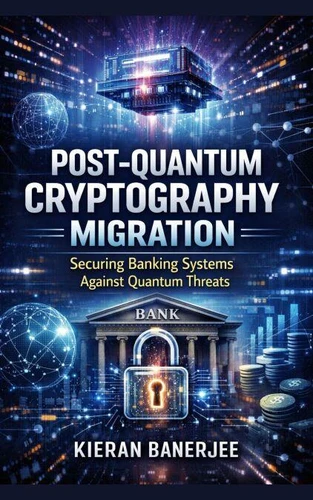
Post-Quantum Cryptography Migration: Securing Banking Systems Against Quantum Threats
Par :Formats :
Disponible dans votre compte client Decitre ou Furet du Nord dès validation de votre commande. Le format ePub est :
- Compatible avec une lecture sur My Vivlio (smartphone, tablette, ordinateur)
- Compatible avec une lecture sur liseuses Vivlio
- Pour les liseuses autres que Vivlio, vous devez utiliser le logiciel Adobe Digital Edition. Non compatible avec la lecture sur les liseuses Kindle, Remarkable et Sony
 , qui est-ce ?
Notre partenaire de plateforme de lecture numérique où vous retrouverez l'ensemble de vos ebooks gratuitement
Pour en savoir plus sur nos ebooks, consultez notre aide en ligne ici
C'est si simple ! Lisez votre ebook avec l'app Vivlio sur votre tablette, mobile ou ordinateur :

- FormatePub
- ISBN8233645693
- EAN9798233645693
- Date de parution24/02/2026
- Protection num.pas de protection
- Infos supplémentairesepub
- ÉditeurLinda Balsamo
Résumé
Quantum computers are coming. Slowly, noisily, and with the subtle promise of breaking the cryptography that currently keeps banks from having very bad days. If you work in banking, fintech, cybersecurity, risk, compliance, or technology leadership, this book is your friendly (and slightly sarcastic) guide to surviving the post-quantum future without panic, paralysis, or pointless buzzwords. Right now, most financial systems rely on cryptographic algorithms that quantum computers will eventually break.
Not "maybe, " not "in theory, " but mathematically, provably break. That means encrypted customer data, payment systems, digital identities, and long-term financial records are all on a ticking clock. Some attackers are already collecting encrypted data today, planning to decrypt it later when quantum machines catch up. Fun times. This book walks you through what that actually means for banks, without assuming you have a physics degree or unlimited patience. We start by explaining the quantum threat in plain language, including how quantum computing differs from classical computing and why algorithms like RSA and ECC are in trouble.
From there, we explore where banking systems are most vulnerable, from core infrastructure and interbank messaging to mobile apps and long-lived data archives. You'll get a practical, jargon-light introduction to post-quantum cryptography, including lattice-based, hash-based, and code-based algorithms, and how global standards bodies like NIST are shaping what comes next. More importantly, you'll learn how to inventory your existing cryptography, assess quantum risk, and build a realistic migration strategy that doesn't involve tearing everything down at once. This book focuses heavily on real-world constraints: legacy systems, performance trade-offs, hardware security modules, regulatory pressure, vendor dependencies, and the uncomfortable truth that crypto migrations are as much organizational problems as technical ones. Along the way, we cover hybrid cryptographic approaches, crypto-agility, compliance considerations, operational readiness, and what successful migration roadmaps actually look like inside large financial institutions.
Hypothetical case studies help connect theory to practice, showing how different types of banks can prepare at different speeds without losing sleep. The tone is practical, occasionally humorous, and relentlessly forward-looking. The goal is not to scare you with quantum doom, but to motivate smart, timely action. Quantum-safe banking is not a single upgrade or checkbox. It's a long-term shift in how we design, manage, and evolve security. If you want a clear, honest, and surprisingly readable guide to post-quantum cryptography migration for banking systems, this book is for you.
The future is quantum. Your security strategy should be ready before it gets here.
Not "maybe, " not "in theory, " but mathematically, provably break. That means encrypted customer data, payment systems, digital identities, and long-term financial records are all on a ticking clock. Some attackers are already collecting encrypted data today, planning to decrypt it later when quantum machines catch up. Fun times. This book walks you through what that actually means for banks, without assuming you have a physics degree or unlimited patience. We start by explaining the quantum threat in plain language, including how quantum computing differs from classical computing and why algorithms like RSA and ECC are in trouble.
From there, we explore where banking systems are most vulnerable, from core infrastructure and interbank messaging to mobile apps and long-lived data archives. You'll get a practical, jargon-light introduction to post-quantum cryptography, including lattice-based, hash-based, and code-based algorithms, and how global standards bodies like NIST are shaping what comes next. More importantly, you'll learn how to inventory your existing cryptography, assess quantum risk, and build a realistic migration strategy that doesn't involve tearing everything down at once. This book focuses heavily on real-world constraints: legacy systems, performance trade-offs, hardware security modules, regulatory pressure, vendor dependencies, and the uncomfortable truth that crypto migrations are as much organizational problems as technical ones. Along the way, we cover hybrid cryptographic approaches, crypto-agility, compliance considerations, operational readiness, and what successful migration roadmaps actually look like inside large financial institutions.
Hypothetical case studies help connect theory to practice, showing how different types of banks can prepare at different speeds without losing sleep. The tone is practical, occasionally humorous, and relentlessly forward-looking. The goal is not to scare you with quantum doom, but to motivate smart, timely action. Quantum-safe banking is not a single upgrade or checkbox. It's a long-term shift in how we design, manage, and evolve security. If you want a clear, honest, and surprisingly readable guide to post-quantum cryptography migration for banking systems, this book is for you.
The future is quantum. Your security strategy should be ready before it gets here.