
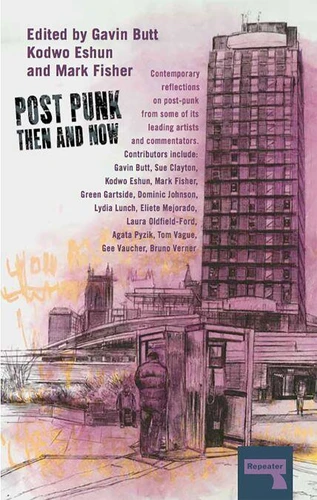
Post-Punk Then and Now
Par : , , , ,Formats :
Disponible dans votre compte client Decitre ou Furet du Nord dès validation de votre commande. Le format ePub protégé est :
- Compatible avec une lecture sur My Vivlio (smartphone, tablette, ordinateur)
- Compatible avec une lecture sur liseuses Vivlio
- Pour les liseuses autres que Vivlio, vous devez utiliser le logiciel Adobe Digital Edition. Non compatible avec la lecture sur les liseuses Kindle, Remarkable et Sony
- Non compatible avec un achat hors France métropolitaine
 , qui est-ce ?
Notre partenaire de plateforme de lecture numérique où vous retrouverez l'ensemble de vos ebooks gratuitement
Pour en savoir plus sur nos ebooks, consultez notre aide en ligne ici
C'est si simple ! Lisez votre ebook avec l'app Vivlio sur votre tablette, mobile ou ordinateur :

- Nombre de pages300
- FormatePub
- ISBN978-1-910924-27-3
- EAN9781910924273
- Date de parution13/09/2016
- Protection num.Adobe DRM
- Taille6 Mo
- Infos supplémentairesepub
- ÉditeurRepeater
Résumé
What were the conditions of possibility for art and music-making before the era of neoliberal capitalism? What role did punk play in turning artists to experiment with popular music in the late 1970s and early 1980s? And why does the art and music of these times seem so newly pertinent to our political present, despite the seeming remoteness of its historical moment? Focusing upon the production of post-punk art, film, music, and publishing, this book offers new perspectives on an overlooked period of cultural activity, and probes the lessons that might be learnt from history for artists and musicians working under 21st century conditions of austerity. Contemporary reflections by those who shaped avant-garde and contestatory culture in the UK, US, Brazil and Poland in the 1970s and 1980s.
Alongside these are contributions by contemporary artists, curators and scholars that provide critical perspectives on post-punk then, and its generative relation to the aesthetics and politics of cultural production today.
Alongside these are contributions by contemporary artists, curators and scholars that provide critical perspectives on post-punk then, and its generative relation to the aesthetics and politics of cultural production today.