
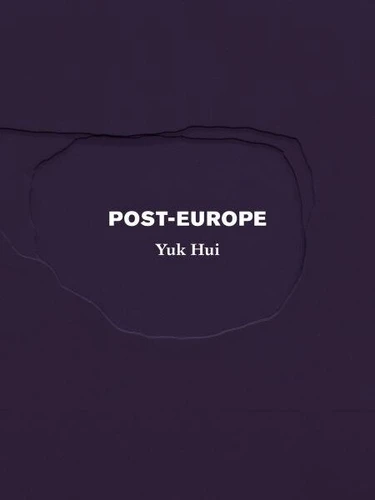
Post-Europe
Par :Formats :
Disponible dans votre compte client Decitre ou Furet du Nord dès validation de votre commande. Le format ePub protégé est :
- Compatible avec une lecture sur My Vivlio (smartphone, tablette, ordinateur)
- Compatible avec une lecture sur liseuses Vivlio
- Pour les liseuses autres que Vivlio, vous devez utiliser le logiciel Adobe Digital Edition. Non compatible avec la lecture sur les liseuses Kindle, Remarkable et Sony
- Non compatible avec un achat hors France métropolitaine
 , qui est-ce ?
Notre partenaire de plateforme de lecture numérique où vous retrouverez l'ensemble de vos ebooks gratuitement
Pour en savoir plus sur nos ebooks, consultez notre aide en ligne ici
C'est si simple ! Lisez votre ebook avec l'app Vivlio sur votre tablette, mobile ou ordinateur :

- Nombre de pages144
- Date de parution08/12/2026
- FormatePub
- ISBN8985423525
- EAN9798985423525
- Protection num.Adobe DRM
- Infos supplémentairesepub
- ÉditeurUrbanomic/Sequence Press
Résumé
Envisioning a post-European thinking: not through a neutralization of differences nor a return to tradition, but through an individuation of thinking between East and West. With the unstoppable advance of global capitalism, the Heimatlosigkeit (homelessness) which twentieth-century European philosophers spoke of-and which Heidegger declared had become the "destiny of the world"-is set to become ever more pathological in its consequences.
But rather than dreaming of an impossible return to Heimat, Yuk Hui argues that today thinking must start out from the standpoint of becoming-homeless. Drawing on the philosophies of Gilbert Simondon, Jacques Derrida, Bernard Stiegler, and Jan Patoc?ka alongside the thought of Kitaro Nishida, Keiji Nishitani, and Mou Zongsan among others, Yuk Hui envisions a project of a post-European thinking. If Asia and Europe are to devise new modes of confronting capitalism, technology, and planetarisation, this must take place neither through a neutralization of differences nor a return to tradition, but through an individuation of thinking between East and West.
But rather than dreaming of an impossible return to Heimat, Yuk Hui argues that today thinking must start out from the standpoint of becoming-homeless. Drawing on the philosophies of Gilbert Simondon, Jacques Derrida, Bernard Stiegler, and Jan Patoc?ka alongside the thought of Kitaro Nishida, Keiji Nishitani, and Mou Zongsan among others, Yuk Hui envisions a project of a post-European thinking. If Asia and Europe are to devise new modes of confronting capitalism, technology, and planetarisation, this must take place neither through a neutralization of differences nor a return to tradition, but through an individuation of thinking between East and West.