
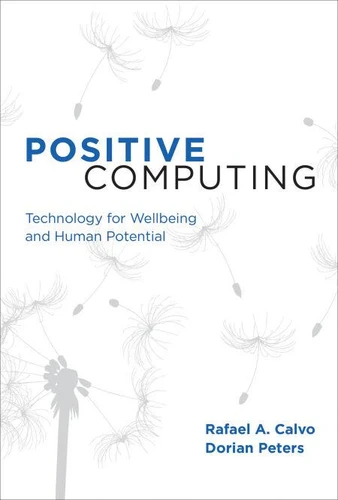
Positive Computing. Technology for Wellbeing and Human Potential
Par : ,Formats :
Disponible dans votre compte client Decitre ou Furet du Nord dès validation de votre commande. Le format ePub protégé est :
- Compatible avec une lecture sur My Vivlio (smartphone, tablette, ordinateur)
- Compatible avec une lecture sur liseuses Vivlio
- Pour les liseuses autres que Vivlio, vous devez utiliser le logiciel Adobe Digital Edition. Non compatible avec la lecture sur les liseuses Kindle, Remarkable et Sony
- Non compatible avec un achat hors France métropolitaine
 , qui est-ce ?
Notre partenaire de plateforme de lecture numérique où vous retrouverez l'ensemble de vos ebooks gratuitement
Pour en savoir plus sur nos ebooks, consultez notre aide en ligne ici
C'est si simple ! Lisez votre ebook avec l'app Vivlio sur votre tablette, mobile ou ordinateur :

- Nombre de pages298
- FormatePub
- ISBN978-0-262-32569-1
- EAN9780262325691
- Date de parution28/11/2014
- Protection num.Adobe DRM
- Taille3 Mo
- Infos supplémentairesepub
- ÉditeurThe MIT Press
Résumé
A case for building a digital environment that can make us happier and healthier, not just more productive, and a theoretical framework for doing so. On the eve of Google's IPO in 2004, Larry Page and Sergey Brin vowed not to be evil. Today, a growing number of technologists would go further, trying to ensure that their work actively improves people's lives. Technology, so pervasive and ubiquitous, has the capacity to increase stress and suffering; but it also has the less-heralded potential to improve the well-being of individuals, society, and the planet.
In this book, Rafael Calvo and Dorian Peters investigate what they term "positive computing"-the design and development of technology to support psychological well-being and human potential. Calvo and Peters explain that technologists' growing interest in social good is part of a larger public concern about how our digital experience affects our emotions and our quality of life-which itself reflects an emerging focus on humanistic values in many different disciplines.
Synthesizing theory, knowledge, and empirical methodologies from a variety of fields, they offer a rigorous and coherent foundational framework for positive computing. Sidebars by experts from psychology, neuroscience, human-computer interaction, and other disciplines supply essential context. Calvo and Peters examine specific well-being factors, including positive emotions, self-awareness, mindfulness, empathy, and compassion, and explore how technology can support these factors.
Finally, they offer suggestions for future research and funding. SidebarsTimothy N. Bickmore, Jeremy Bailenson, danah boyd, Jane Burns, David R. Caruso, Mihaly Csikszentmihalyi, Felicia Huppert, Mary-Helen Immordino-Yang, Adele Krusche and J. Mark G. Williams, Jane McGonigal, Jonathan Nicholas, Don Norman, Yvonne Rogers
In this book, Rafael Calvo and Dorian Peters investigate what they term "positive computing"-the design and development of technology to support psychological well-being and human potential. Calvo and Peters explain that technologists' growing interest in social good is part of a larger public concern about how our digital experience affects our emotions and our quality of life-which itself reflects an emerging focus on humanistic values in many different disciplines.
Synthesizing theory, knowledge, and empirical methodologies from a variety of fields, they offer a rigorous and coherent foundational framework for positive computing. Sidebars by experts from psychology, neuroscience, human-computer interaction, and other disciplines supply essential context. Calvo and Peters examine specific well-being factors, including positive emotions, self-awareness, mindfulness, empathy, and compassion, and explore how technology can support these factors.
Finally, they offer suggestions for future research and funding. SidebarsTimothy N. Bickmore, Jeremy Bailenson, danah boyd, Jane Burns, David R. Caruso, Mihaly Csikszentmihalyi, Felicia Huppert, Mary-Helen Immordino-Yang, Adele Krusche and J. Mark G. Williams, Jane McGonigal, Jonathan Nicholas, Don Norman, Yvonne Rogers