OFFRE LISEUSES
Une liseuse achetée = une housse offerte* jusqu'au 21 juin

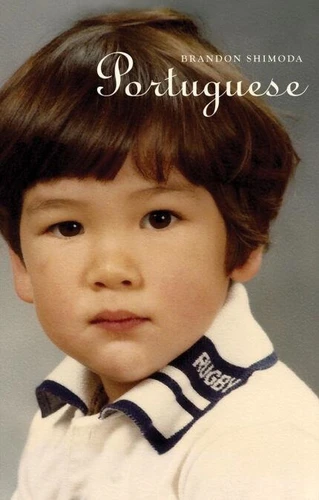
Portuguese. Poems
Par :Formats :
Disponible dans votre compte client Decitre ou Furet du Nord dès validation de votre commande. Le format ePub protégé est :
- Compatible avec une lecture sur My Vivlio (smartphone, tablette, ordinateur)
- Compatible avec une lecture sur liseuses Vivlio
- Pour les liseuses autres que Vivlio, vous devez utiliser le logiciel Adobe Digital Edition. Non compatible avec la lecture sur les liseuses Kindle, Remarkable et Sony
- Non compatible avec un achat hors France métropolitaine
 , qui est-ce ?
Notre partenaire de plateforme de lecture numérique où vous retrouverez l'ensemble de vos ebooks gratuitement
Pour en savoir plus sur nos ebooks, consultez notre aide en ligne ici
C'est si simple ! Lisez votre ebook avec l'app Vivlio sur votre tablette, mobile ou ordinateur :

- Nombre de pages100
- FormatePub
- ISBN978-1-935639-52-7
- EAN9781935639527
- Date de parution18/02/2013
- Protection num.Adobe DRM
- Taille662 Ko
- Infos supplémentairesepub
- ÉditeurTin House
Résumé
The first book in a series of collaborations between Tin House and Octopus Books, Brandon Shimoda's Portuguese introduces a powerful new voice in American poetry. The poems in Portuguese began while Brandon rode city buses around Seattle, and were inspired by his fellow passengers-their voices and their minds, their faces and their bodies, their exuberances and infirmities, and the ways in which they enlivened and darkened the days at once.
It was with and within these people that poetry seemed most alive. At the same time, they began as responses to the words and writings of visual artists, mostly painters, whom Brandon was reading while riding the bus, especially Etel Adnan, Eugène Delacroix, Alberto Giacometti, Paul Klee, and Joan Mitchell, all of whom appear in the book. It was with and within these people, also, that poetry seemed most alive. In both senses, Portuguese is a work of color. Portuguese owes also a debt to a visit to Beirut, Lebanon (2009); six months spent in a cabin in the woods of western Maine (2010-2011); and the Japanese poets Kazuko Shiraishi, Ryuichi Tamura and Minoru Yoshioka, and their translators.
It was written primarily in Seattle, Washington; Beirut, Lebanon; and Weld, Maine, though revised in Albany, California; Beacon, New York; and St. Louis, Missouri. In that sense, Portuguese is a travelogue, as well as a work of restlessness. Throughout writing the poems that became Portuguese, the presiding struggle was with poetry itself-the form and its impulses-voice and mind, face and body, exuberance and infirmity-as well as with the act of writing.
The book actually began in the early 1980s, while on the bus to elementary school in a small town in New England, when Brandon was taunted for being "Portuguese." In that sense, Portuguese returns its author to this moment in which he felt challenged to become what he was being called, however falsely, and despite feeling confused, flushed and afraid. In that sense, Portuguese is a work of crossdressing. However, Portuguese is both more and less than all these things.
It was-and is-a way to keep up with life in the form of drawing observations and feelings on paper, and to give form to the energy making up some part of memory. It is the fourth book in a series that began with The Alps, The Girl Without Arms, and O Bon. In this sense-and in all those above-it is an act of preservation, and therefore a work for his friends, his family, and for love.
It was with and within these people that poetry seemed most alive. At the same time, they began as responses to the words and writings of visual artists, mostly painters, whom Brandon was reading while riding the bus, especially Etel Adnan, Eugène Delacroix, Alberto Giacometti, Paul Klee, and Joan Mitchell, all of whom appear in the book. It was with and within these people, also, that poetry seemed most alive. In both senses, Portuguese is a work of color. Portuguese owes also a debt to a visit to Beirut, Lebanon (2009); six months spent in a cabin in the woods of western Maine (2010-2011); and the Japanese poets Kazuko Shiraishi, Ryuichi Tamura and Minoru Yoshioka, and their translators.
It was written primarily in Seattle, Washington; Beirut, Lebanon; and Weld, Maine, though revised in Albany, California; Beacon, New York; and St. Louis, Missouri. In that sense, Portuguese is a travelogue, as well as a work of restlessness. Throughout writing the poems that became Portuguese, the presiding struggle was with poetry itself-the form and its impulses-voice and mind, face and body, exuberance and infirmity-as well as with the act of writing.
The book actually began in the early 1980s, while on the bus to elementary school in a small town in New England, when Brandon was taunted for being "Portuguese." In that sense, Portuguese returns its author to this moment in which he felt challenged to become what he was being called, however falsely, and despite feeling confused, flushed and afraid. In that sense, Portuguese is a work of crossdressing. However, Portuguese is both more and less than all these things.
It was-and is-a way to keep up with life in the form of drawing observations and feelings on paper, and to give form to the energy making up some part of memory. It is the fourth book in a series that began with The Alps, The Girl Without Arms, and O Bon. In this sense-and in all those above-it is an act of preservation, and therefore a work for his friends, his family, and for love.