
Prix Nobel d'Economie 2019
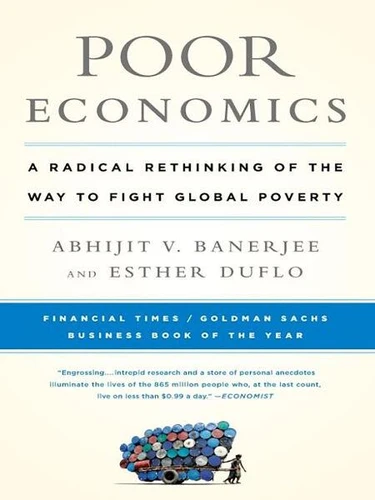
Poor Economics. A Radical Rethinking of the Way to Fight Global Poverty
Par : ,Formats :
Disponible dans votre compte client Decitre ou Furet du Nord dès validation de votre commande. Le format ePub protégé est :
- Compatible avec une lecture sur My Vivlio (smartphone, tablette, ordinateur)
- Compatible avec une lecture sur liseuses Vivlio
- Pour les liseuses autres que Vivlio, vous devez utiliser le logiciel Adobe Digital Edition. Non compatible avec la lecture sur les liseuses Kindle, Remarkable et Sony
- Non compatible avec un achat hors France métropolitaine
 , qui est-ce ?
Notre partenaire de plateforme de lecture numérique où vous retrouverez l'ensemble de vos ebooks gratuitement
Pour en savoir plus sur nos ebooks, consultez notre aide en ligne ici
C'est si simple ! Lisez votre ebook avec l'app Vivlio sur votre tablette, mobile ou ordinateur :

- Nombre de pages416
- FormatePub
- ISBN978-1-5417-0619-4
- EAN9781541706194
- Date de parution16/09/2025
- Protection num.Adobe DRM
- Infos supplémentairesepub
- ÉditeurPublicAffairs
Résumé
In this new edition of their classic work, the winners of the Nobel Prize in Economics upend the most common assumptions about how economics works, providing a "rich and humane" (Financial Times) examination of how poor people actually live Why do the poor borrow to save? Why do they miss out on free lifesaving immunizations but pay for unnecessary drugs? Why do children from poor families attend school but fail to learn anything? In Poor Economics, Abhijit V.
Banerjee and Esther Duflo, two Nobel Prize-winning MIT professors, answer these questions based on years of field research from around the world. Together, they investigate what the lives and choices of the poor tell us about how to fight global poverty, from why microfinance is useful without being the miracle some hoped it would be to why the poor don't want health insurance. Throughout, they reveal that even as many magic bullets of yesterday have ended up as today's failed ideas, there is a path forward through this challenge. Updated with significant new material based on insights from the last decade of research, Poor Economics is a radical and hopeful rethinking of the economics of poverty and an intimate view of the life of the poor around the world.
Banerjee and Esther Duflo, two Nobel Prize-winning MIT professors, answer these questions based on years of field research from around the world. Together, they investigate what the lives and choices of the poor tell us about how to fight global poverty, from why microfinance is useful without being the miracle some hoped it would be to why the poor don't want health insurance. Throughout, they reveal that even as many magic bullets of yesterday have ended up as today's failed ideas, there is a path forward through this challenge. Updated with significant new material based on insights from the last decade of research, Poor Economics is a radical and hopeful rethinking of the economics of poverty and an intimate view of the life of the poor around the world.
A propos de Abhijit V. Banerjee
14,90 €
5/5
Repenser la pauvreté
Poche
12,90 €

22,00 €
5/5
7,10 €

16,40 €

Good Economics for Hard Times
Grand Format
29,50 €