
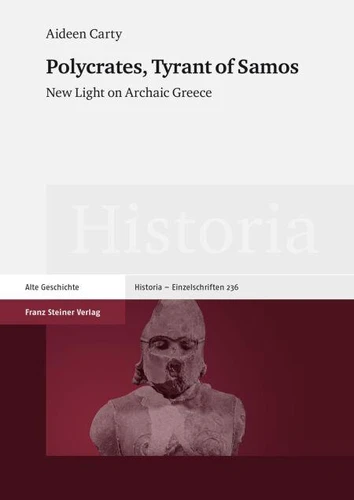
Polycrates, Tyrant of Samos. New Light on Archaic Greece
Par :Formats :
Disponible dans votre compte client Decitre ou Furet du Nord dès validation de votre commande. Le format PDF est :
- Compatible avec une lecture sur My Vivlio (smartphone, tablette, ordinateur)
- Compatible avec une lecture sur liseuses Vivlio
- Pour les liseuses autres que Vivlio, vous devez utiliser le logiciel Adobe Digital Edition. Non compatible avec la lecture sur les liseuses Kindle, Remarkable et Sony
 , qui est-ce ?
Notre partenaire de plateforme de lecture numérique où vous retrouverez l'ensemble de vos ebooks gratuitement
Pour en savoir plus sur nos ebooks, consultez notre aide en ligne ici
C'est si simple ! Lisez votre ebook avec l'app Vivlio sur votre tablette, mobile ou ordinateur :

- Nombre de pages260
- FormatPDF
- ISBN978-3-515-10900-0
- EAN9783515109000
- Date de parution27/11/2014
- Protection num.Digital Watermarking
- Taille2 Mo
- Infos supplémentairespdf
- ÉditeurFranz Steiner
Résumé
This is the first intensive analysis of one of the most significant figures in Greek history: Polycrates, the 6th century BC Greek tyrant of Samos island, who was renowned for unassailable control of the Aegean Sea when Egypt and Persia were competing for dominance in the area. Polycrates played a pivotal role in this tumultuous period, and in the histories of Archaic Greece, Achaemenid Persia, and Saïte Egypt. The chronological extent of this e-book ranges from the late 7th century BC to Polycrates' death in 522 BC.
Key questions concern the basis of his tyranny within the context of earlier Samian history, his alliance with Egypt, his possible support for the Persian invasion of Egypt c. 525 BC, and the reason for an attack on him by Sparta at roughly the same time. With sensitive use of Near Eastern evidence, a new picture emerges of Greek relations with the Near Eastern empires - one that has profound implications for traditional concepts of both tyranny and voluntary mercenary service in the archaic period.
Key questions concern the basis of his tyranny within the context of earlier Samian history, his alliance with Egypt, his possible support for the Persian invasion of Egypt c. 525 BC, and the reason for an attack on him by Sparta at roughly the same time. With sensitive use of Near Eastern evidence, a new picture emerges of Greek relations with the Near Eastern empires - one that has profound implications for traditional concepts of both tyranny and voluntary mercenary service in the archaic period.