Christopher Adams is Rector of St. Paul's College in Winnipeg and an adjunct professor at the Asper School of Business and at the University of Winnipeg. He holds a PhD in political science from Carleton University, and teaches graduate courses in business and politics at University of Winnipeg and University of Manitoba.
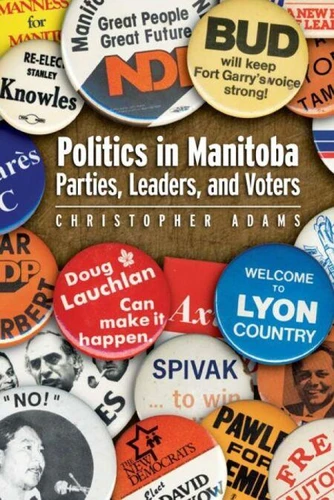
Politics in Manitoba. Parties, Leaders, and Voters
Par :Formats :
Disponible dans votre compte client Decitre ou Furet du Nord dès validation de votre commande. Le format ePub est :
- Compatible avec une lecture sur My Vivlio (smartphone, tablette, ordinateur)
- Compatible avec une lecture sur liseuses Vivlio
- Pour les liseuses autres que Vivlio, vous devez utiliser le logiciel Adobe Digital Edition. Non compatible avec la lecture sur les liseuses Kindle, Remarkable et Sony
 , qui est-ce ?
Notre partenaire de plateforme de lecture numérique où vous retrouverez l'ensemble de vos ebooks gratuitement
Pour en savoir plus sur nos ebooks, consultez notre aide en ligne ici
C'est si simple ! Lisez votre ebook avec l'app Vivlio sur votre tablette, mobile ou ordinateur :

- Nombre de pages200
- FormatePub
- ISBN978-0-88755-985-3
- EAN9780887559853
- Date de parution15/09/2008
- Protection num.Digital Watermarking
- Taille5 Mo
- Infos supplémentairesepub
- ÉditeurUniversity of Manitoba Press
Résumé
Politics in Manitoba is the first comprehensive review of the Manitoba party system that combines history and contemporary public opinion data to reveal the political and voter trends that have shaped the province of Manitoba over the past 130 years. The book details the histories of the Progressive Conservatives, the Liberals, and the New Democratic Party from 1870 to 2007. Adams looks in particular at the enduring influence of political geography and political culture, as well as the impact of leadership, campaign strategies, organizational resources, and the media on voter preferences.
Adams also presents here for the first time public opinion data based on more than 25, 000 interviews with Manitobans, conducted between 1999 and 2007. He analyzes voter age, gender, income, education, and geographic location to determine how Manitobans vote. In the process Adams dispels some commonly held beliefs about party supporters and identifies recurring themes in voter behaviour.
Adams also presents here for the first time public opinion data based on more than 25, 000 interviews with Manitobans, conducted between 1999 and 2007. He analyzes voter age, gender, income, education, and geographic location to determine how Manitobans vote. In the process Adams dispels some commonly held beliefs about party supporters and identifies recurring themes in voter behaviour.