SOLDES
Jusqu'à -70% sur une sélection d'articles*

Nouveauté
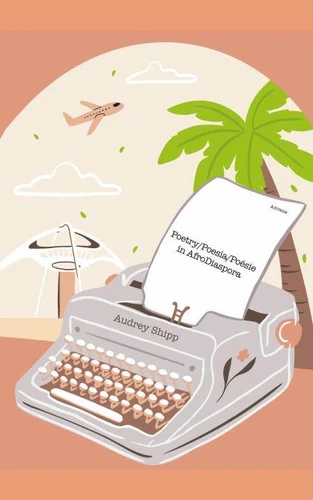
Poetry/Poesía/Poésie in AfroDiaspora
Par :Formats :
Disponible dans votre compte client Decitre ou Furet du Nord dès validation de votre commande. Le format ePub est :
- Compatible avec une lecture sur My Vivlio (smartphone, tablette, ordinateur)
- Compatible avec une lecture sur liseuses Vivlio
- Pour les liseuses autres que Vivlio, vous devez utiliser le logiciel Adobe Digital Edition. Non compatible avec la lecture sur les liseuses Kindle, Remarkable et Sony
 , qui est-ce ?
Notre partenaire de plateforme de lecture numérique où vous retrouverez l'ensemble de vos ebooks gratuitement
Pour en savoir plus sur nos ebooks, consultez notre aide en ligne ici
C'est si simple ! Lisez votre ebook avec l'app Vivlio sur votre tablette, mobile ou ordinateur :

- FormatePub
- ISBN8235003606
- EAN9798235003606
- Date de parution30/06/2026
- Protection num.pas de protection
- Infos supplémentairesepub
- ÉditeurIoakim Ioakim
Résumé
In this stunning collection, writer Audrey Shipp resuscitates the poems of her poetic voice, Adriana - a young poet who resists the alienation of her birth city Los Angeles. Using multilingual diction for an acercamiento (approaching) towards an African/Black diaspora she perceived as distant at the time, she offers "Poetry/Poesía/Poésie" that "cascades from las caderas / pushing from the thighs / como recién nacido (like a newborn)."Contrasting her feelings of estrangement, she is equally fascinated by the articulation of nativeness and the concept of indigeneity.
We see this in the poem "Una Carta/A Letter from the Colony" which opens the collection with the words "glancing out the window / I shall see the uneven pattern of my history / and the outline of a future already planned / a plan I must continually struggle to break." As a Black woman, the poet invites us into the steadfast and ever-changing world of Los Angeles as she compares herself to a river in "I Slip Away Sometime." Here the voice echoes "and down I go, I go, I go sometime / into secret, hidden places / dark alleys sometime / where rivers used to roll / like the hips of a Black gal, yes."The young poet acknowledges her failed attempts at leaving the city.
She is then left to construct a sense of home on the shifting sands of Los Angeles - a city spurred by capitalism to reinvent itself year to year, pushing entire communities and their sense of connectedness aside. Her poem "Buses" personifies a mode of public transportation that not only moves people across the scattered terrain of the city but also carries different languages, such as Chicano Caló.
The poem evokes "buses / llenos de Caló / camiones que hablan / y gritan / camiones que sudan / que trabajan a oscuras."This collection draws us in with other themes the mature writer develops in her forthcoming memoir including the quest for romantic love, the conflict of living in a country that is seemingly always at war, the power of music to create community, and the struggle to overcome life's inevitable feelings of loss.
We see this in the poem "Una Carta/A Letter from the Colony" which opens the collection with the words "glancing out the window / I shall see the uneven pattern of my history / and the outline of a future already planned / a plan I must continually struggle to break." As a Black woman, the poet invites us into the steadfast and ever-changing world of Los Angeles as she compares herself to a river in "I Slip Away Sometime." Here the voice echoes "and down I go, I go, I go sometime / into secret, hidden places / dark alleys sometime / where rivers used to roll / like the hips of a Black gal, yes."The young poet acknowledges her failed attempts at leaving the city.
She is then left to construct a sense of home on the shifting sands of Los Angeles - a city spurred by capitalism to reinvent itself year to year, pushing entire communities and their sense of connectedness aside. Her poem "Buses" personifies a mode of public transportation that not only moves people across the scattered terrain of the city but also carries different languages, such as Chicano Caló.
The poem evokes "buses / llenos de Caló / camiones que hablan / y gritan / camiones que sudan / que trabajan a oscuras."This collection draws us in with other themes the mature writer develops in her forthcoming memoir including the quest for romantic love, the conflict of living in a country that is seemingly always at war, the power of music to create community, and the struggle to overcome life's inevitable feelings of loss.