SOLDES
Jusqu'à -70% sur une sélection d'articles*

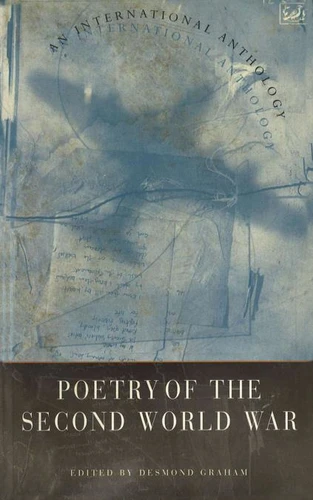
Poetry Of The Second World War
Par :Formats :
Disponible dans votre compte client Decitre ou Furet du Nord dès validation de votre commande. Le format ePub protégé est :
- Compatible avec une lecture sur My Vivlio (smartphone, tablette, ordinateur)
- Compatible avec une lecture sur liseuses Vivlio
- Pour les liseuses autres que Vivlio, vous devez utiliser le logiciel Adobe Digital Edition. Non compatible avec la lecture sur les liseuses Kindle, Remarkable et Sony
- Non compatible avec un achat hors France métropolitaine
 , qui est-ce ?
Notre partenaire de plateforme de lecture numérique où vous retrouverez l'ensemble de vos ebooks gratuitement
Pour en savoir plus sur nos ebooks, consultez notre aide en ligne ici
C'est si simple ! Lisez votre ebook avec l'app Vivlio sur votre tablette, mobile ou ordinateur :

- Nombre de pages320
- FormatePub
- ISBN978-1-4464-7633-8
- EAN9781446476338
- Date de parution31/05/2011
- Protection num.Adobe DRM
- Infos supplémentairesepub
- ÉditeurVintage Digital
Résumé
Poetry of the Second World War brings to light a neglected chapter in world literature. In its chorus of haunting poetic voices, over a hundred of the most articulate minds of their generation record the true experience of the 1939-45 conflict, and its unending consequences. In keeping with its subject, it has an international scope, with poems from over twenty countries, including Japan, Australia, Europe, America and Russia; poems in which human responses echo each other across boundaries of culture and state.
Auden, Brecht, Stevie Smith, Primo Levi, Zbigniew Herbert and Anna Akhmatova are set alongside the eloquence of unknown poets. The anthology has been arranged to bring out the chronological and cumulative human experience of the war: pre-war fears, air raids, the boredom, fear and camaraderie of military life; battle, occupation and resistance; surviving and the aftermath. Here at last, are the poems of the Holocaust, the Blitz, Hiroshima; of soldiers, refugees and disrupted lives.
What emerges is a poetry capable of conveying the vast and terrible sweep of war.
Auden, Brecht, Stevie Smith, Primo Levi, Zbigniew Herbert and Anna Akhmatova are set alongside the eloquence of unknown poets. The anthology has been arranged to bring out the chronological and cumulative human experience of the war: pre-war fears, air raids, the boredom, fear and camaraderie of military life; battle, occupation and resistance; surviving and the aftermath. Here at last, are the poems of the Holocaust, the Blitz, Hiroshima; of soldiers, refugees and disrupted lives.
What emerges is a poetry capable of conveying the vast and terrible sweep of war.