
Born in 1983 in former Yugoslavia, Srecko Horvat is a European philosopher without stable address. He is traveling across continents giving lectures, visiting refugee camps and protests, advocating radical democracy as one of the founders and figureheads of the Democracy in Europe Movement 2025 (DiEM25). He is the author of numerous books, including The Radicality of Love, What Does Europe Want (co-authored with Slavoj Zizek) and Subversion!
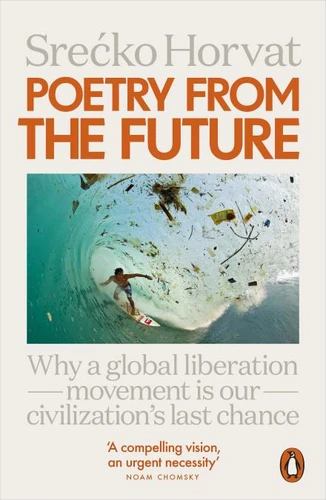
Poetry from the Future. Why a Global Liberation Movement Is Our Civilisation's Last Chance
Par :Formats :
Disponible dans votre compte client Decitre ou Furet du Nord dès validation de votre commande. Le format ePub protégé est :
- Compatible avec une lecture sur My Vivlio (smartphone, tablette, ordinateur)
- Compatible avec une lecture sur liseuses Vivlio
- Pour les liseuses autres que Vivlio, vous devez utiliser le logiciel Adobe Digital Edition. Non compatible avec la lecture sur les liseuses Kindle, Remarkable et Sony
- Non compatible avec un achat hors France métropolitaine
 , qui est-ce ?
Notre partenaire de plateforme de lecture numérique où vous retrouverez l'ensemble de vos ebooks gratuitement
Pour en savoir plus sur nos ebooks, consultez notre aide en ligne ici
C'est si simple ! Lisez votre ebook avec l'app Vivlio sur votre tablette, mobile ou ordinateur :

- Nombre de pages192
- FormatePub
- ISBN978-0-14-198770-5
- EAN9780141987705
- Date de parution02/05/2019
- Protection num.Adobe DRM
- Infos supplémentairesepub
- ÉditeurPENGUIN
Résumé
'A compelling vision, an urgent necessity, and not beyond reach' Noam ChomskyThe past is forgotten, and the future is without hope. Dystopia has become a reality. This is the new normal in our apocalyptic politics - but if we accept it, our helplessness is guaranteed. To bring about real change, argues activist and political philosopher Srecko Horvat, we must first transform our mindset. Ranging through time and space, from the partisan liberation movements of Nazi-occupied Yugoslavia to the contemporary culture, refugee camps and political frontlines of 21st century Europe, Horvat shows that the problems we face today are of an unprecedented nature.
To solve them, he argues in this passionate call for a new radical internationalism, we must move beyond existing ways of thinking: beyond borders, national identities and the redundant narratives of the past. Only in this way can we create new models for living and, together, shape a more open and optimistic future.
To solve them, he argues in this passionate call for a new radical internationalism, we must move beyond existing ways of thinking: beyond borders, national identities and the redundant narratives of the past. Only in this way can we create new models for living and, together, shape a more open and optimistic future.
A propos de Srecko Horvat
20,00 €