
Kelly Clancy, PhD, is a neuroscientist and physicist who has held research positions at MIT, Berkeley, University College London, and DeepMind. She develops novel brain-computer interfaces with the aim of understanding the principles of intelligence. Her writing has appeared in Wired, Harper's and The New Yorker. She spent her childhood being repeatedly murdered by her sisters in the video game GoldenEye 007.
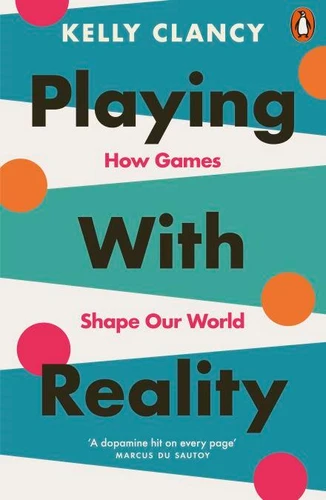
Playing with Reality. How Games Shape Our World
Par :Formats :
Disponible dans votre compte client Decitre ou Furet du Nord dès validation de votre commande. Le format ePub protégé est :
- Compatible avec une lecture sur My Vivlio (smartphone, tablette, ordinateur)
- Compatible avec une lecture sur liseuses Vivlio
- Pour les liseuses autres que Vivlio, vous devez utiliser le logiciel Adobe Digital Edition. Non compatible avec la lecture sur les liseuses Kindle, Remarkable et Sony
- Non compatible avec un achat hors France métropolitaine
 , qui est-ce ?
Notre partenaire de plateforme de lecture numérique où vous retrouverez l'ensemble de vos ebooks gratuitement
Pour en savoir plus sur nos ebooks, consultez notre aide en ligne ici
C'est si simple ! Lisez votre ebook avec l'app Vivlio sur votre tablette, mobile ou ordinateur :

- Nombre de pages368
- FormatePub
- ISBN978-0-14-199894-7
- EAN9780141998947
- Date de parution18/06/2024
- Protection num.Adobe DRM
- Infos supplémentairesepub
- ÉditeurPENGUIN
Résumé
'A dopamine hit on every page' Marcus du SautoyA sweeping intellectual history of games and their importance to human progress. We play games to learn about the world, to understand our minds and the minds of others, and to practice making predictions about the future. Games are thought to be older than written language, and have now become the dominant cultural media-bigger than movies, TV, music, and literature combined.
They are also fun. But as neuroscientist and physicist Kelly Clancy argues, it's time we started taking them more seriously. In Playing With Reality, she chronicles the riveting and hidden history of games since the Enlightenment, weaving an unexpected path through military theory, biology, artificial intelligence, neuroscience, cognitive psychology, and the future of democracy. Games, Clancy shows us, have been deeply intertwined with the arc of history.
War games shaped the outcomes of real wars in nineteenth and twentieth century Europe. Game theory warped our understanding of human behaviour and brought us to the brink of annihilation-yet still underlies basic assumptions in economics, politics, and technology. We used games to teach computers how to learn for themselves, and now we are designing games that will determine the shape of society and future of democracy.
Games also inform the basic systems that govern our daily lives: the social media and technology that can warp our preferences, polarise us, and manufacture our desires. Lucid, thought-provoking, and masterfully told, Playing With Reality makes the bold argument that the human fascination with games is the key to understanding our nature.
They are also fun. But as neuroscientist and physicist Kelly Clancy argues, it's time we started taking them more seriously. In Playing With Reality, she chronicles the riveting and hidden history of games since the Enlightenment, weaving an unexpected path through military theory, biology, artificial intelligence, neuroscience, cognitive psychology, and the future of democracy. Games, Clancy shows us, have been deeply intertwined with the arc of history.
War games shaped the outcomes of real wars in nineteenth and twentieth century Europe. Game theory warped our understanding of human behaviour and brought us to the brink of annihilation-yet still underlies basic assumptions in economics, politics, and technology. We used games to teach computers how to learn for themselves, and now we are designing games that will determine the shape of society and future of democracy.
Games also inform the basic systems that govern our daily lives: the social media and technology that can warp our preferences, polarise us, and manufacture our desires. Lucid, thought-provoking, and masterfully told, Playing With Reality makes the bold argument that the human fascination with games is the key to understanding our nature.