
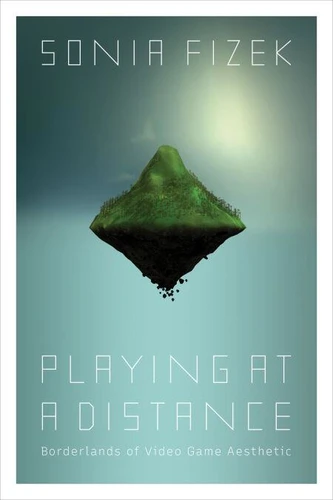
Playing at a Distance. Borderlands of Video Game Aesthetic
Par :Formats :
Disponible dans votre compte client Decitre ou Furet du Nord dès validation de votre commande. Le format ePub protégé est :
- Compatible avec une lecture sur My Vivlio (smartphone, tablette, ordinateur)
- Compatible avec une lecture sur liseuses Vivlio
- Pour les liseuses autres que Vivlio, vous devez utiliser le logiciel Adobe Digital Edition. Non compatible avec la lecture sur les liseuses Kindle, Remarkable et Sony
- Non compatible avec un achat hors France métropolitaine
 , qui est-ce ?
Notre partenaire de plateforme de lecture numérique où vous retrouverez l'ensemble de vos ebooks gratuitement
Pour en savoir plus sur nos ebooks, consultez notre aide en ligne ici
C'est si simple ! Lisez votre ebook avec l'app Vivlio sur votre tablette, mobile ou ordinateur :

- Nombre de pages192
- FormatePub
- ISBN978-0-262-37218-3
- EAN9780262372183
- Date de parution01/11/2022
- Protection num.Adobe DRM
- Taille1 Mo
- Infos supplémentairesepub
- ÉditeurThe MIT Press
Résumé
An essential exploration of the video game aesthetic that decenters the human player-requiring little human action-and challenges what it means to play. Do we play video games or do video games play us? Is nonhuman play a mere paradox or the future of gaming? And what do video games have to do with quantum theory? In Playing at a Distance, Sonia Fizek engages with these and many more daunting questions, forging new ways to think and talk about games and play that decenter the human player and explore a variety of play formats and practices that require surprisingly little human action.
Idling in clicker games, wandering in walking simulators, automating gameplay with bots, or simply watching games rather than playing them-Fizek shows how these seemingly marginal cases are central to understanding how we play in the digital age. Introducing the concept of distance, Fizek reorients our view of computer-mediated play. To "play at a distance, " she says, is to delegate the immediate action to the machine and to become participants in an algorithmic spectacle.
Distance as a media aesthetic framework enables the reader to come to terms with the ambiguity and aesthetic diversity of play. Drawing on concepts from philosophy, media theory, and posthumanism, as well as cultural and film studies, Playing at a Distance invites a wider understanding of what digital games and gaming are in all their diverse experiences and forms. In challenging the common perception of video games as inherently interactive, the book contributes to our understanding of the computer's influence on practices of play-and prods us to think more broadly about what it means to play.
Idling in clicker games, wandering in walking simulators, automating gameplay with bots, or simply watching games rather than playing them-Fizek shows how these seemingly marginal cases are central to understanding how we play in the digital age. Introducing the concept of distance, Fizek reorients our view of computer-mediated play. To "play at a distance, " she says, is to delegate the immediate action to the machine and to become participants in an algorithmic spectacle.
Distance as a media aesthetic framework enables the reader to come to terms with the ambiguity and aesthetic diversity of play. Drawing on concepts from philosophy, media theory, and posthumanism, as well as cultural and film studies, Playing at a Distance invites a wider understanding of what digital games and gaming are in all their diverse experiences and forms. In challenging the common perception of video games as inherently interactive, the book contributes to our understanding of the computer's influence on practices of play-and prods us to think more broadly about what it means to play.