SOLDES
Jusqu'à -70% sur une sélection d'articles*

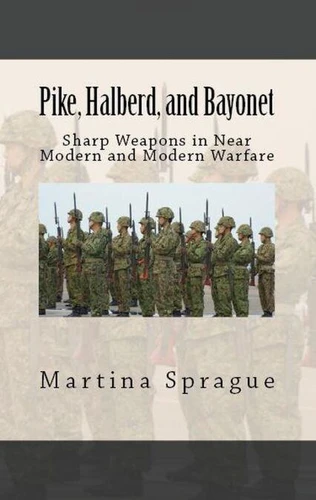
Pike, Halberd, and Bayonet: Sharp Weapons in Near Modern and Modern Warfare. Knives, Swords, and Bayonets: A World History of Edged Weapon Warfare, #10
Par :Formats :
Disponible dans votre compte client Decitre ou Furet du Nord dès validation de votre commande. Le format ePub protégé est :
- Compatible avec une lecture sur My Vivlio (smartphone, tablette, ordinateur)
- Compatible avec une lecture sur liseuses Vivlio
- Pour les liseuses autres que Vivlio, vous devez utiliser le logiciel Adobe Digital Edition. Non compatible avec la lecture sur les liseuses Kindle, Remarkable et Sony
- Non compatible avec un achat hors France métropolitaine
 , qui est-ce ?
Notre partenaire de plateforme de lecture numérique où vous retrouverez l'ensemble de vos ebooks gratuitement
Pour en savoir plus sur nos ebooks, consultez notre aide en ligne ici
C'est si simple ! Lisez votre ebook avec l'app Vivlio sur votre tablette, mobile ou ordinateur :

- FormatePub
- ISBN978-1-386-71794-2
- EAN9781386717942
- Date de parution18/03/2018
- Protection num.Adobe DRM
- Infos supplémentairesepub
- ÉditeurRelay Publishing
Résumé
The polearms used by pikemen constituted the first stage of a military revolution that would force a change in the tactics of warfare. The pike, a two-handed polearm with a long spear-like tip, originated in the fourteenth century and was carried by infantry soldiers as defense against charging cavalry. The halberd, too, proved a fearsome and pragmatic weapon used in the armies of medieval and post-medieval Europe.
When supplemented by pikemen, halberdiers became a formidable force. Pikemen would dominate the battlefield until the late 1500s when new technology led to the implementation of muskets and later bayonets. Early bayonets were long sword-like weapons which, like the pike, were originally used to ward off cavalry charges. Part of the bayonet's utility rested with the fact that firearms were cumbersome to reload.
If the initial firing failed to dispatch the enemy, a bayonet charge might prove necessary. Although the bayonet charge seldom, if ever, decided the victory, the bayonet proved useful in trench warfare in conjunction with other weapons such as a rifle and hand grenade. This book begins with a discussion of the edged weapons that were the forerunners to the bayonet: the pike and the halberd. It then examines the physical drill and mental preparation required of the soldier to successfully engage an enemy combatant with the bayonet.
Next it covers military operations in which the bayonet has served a primary function from the eighteenth century to modern day, followed by a study of the utility of the bayonet in the age of firearms, particularly in World War I. The concluding remarks focus on the popularity of the bayonet since its inception and the reasons why it survived as a weapon of the modern battlefield.
When supplemented by pikemen, halberdiers became a formidable force. Pikemen would dominate the battlefield until the late 1500s when new technology led to the implementation of muskets and later bayonets. Early bayonets were long sword-like weapons which, like the pike, were originally used to ward off cavalry charges. Part of the bayonet's utility rested with the fact that firearms were cumbersome to reload.
If the initial firing failed to dispatch the enemy, a bayonet charge might prove necessary. Although the bayonet charge seldom, if ever, decided the victory, the bayonet proved useful in trench warfare in conjunction with other weapons such as a rifle and hand grenade. This book begins with a discussion of the edged weapons that were the forerunners to the bayonet: the pike and the halberd. It then examines the physical drill and mental preparation required of the soldier to successfully engage an enemy combatant with the bayonet.
Next it covers military operations in which the bayonet has served a primary function from the eighteenth century to modern day, followed by a study of the utility of the bayonet in the age of firearms, particularly in World War I. The concluding remarks focus on the popularity of the bayonet since its inception and the reasons why it survived as a weapon of the modern battlefield.
A propos de Martina Sprague

















3,50 €