
Jeremy Harwood has written widely on many historical topics, ranging from key developments in human thought to history's unresolved mysteries. Among his recent books are five volumes surveying the political and social history of Britain from mid-Victorian times to the end of the 20th century and a study of the philosophic origins of Freemasonry.
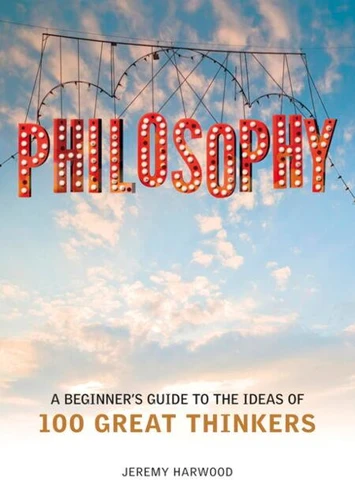
Philosophy. A Beginner's Guide
Par :Formats :
Disponible dans votre compte client Decitre ou Furet du Nord dès validation de votre commande. Le format ePub protégé est :
- Compatible avec une lecture sur My Vivlio (smartphone, tablette, ordinateur)
- Compatible avec une lecture sur liseuses Vivlio
- Pour les liseuses autres que Vivlio, vous devez utiliser le logiciel Adobe Digital Edition. Non compatible avec la lecture sur les liseuses Kindle, Remarkable et Sony
- Non compatible avec un achat hors France métropolitaine
 , qui est-ce ?
Notre partenaire de plateforme de lecture numérique où vous retrouverez l'ensemble de vos ebooks gratuitement
Pour en savoir plus sur nos ebooks, consultez notre aide en ligne ici
C'est si simple ! Lisez votre ebook avec l'app Vivlio sur votre tablette, mobile ou ordinateur :

- Nombre de pages192
- FormatePub
- ISBN978-1-78087-801-0
- EAN9781780878010
- Date de parution19/09/2012
- Protection num.Adobe DRM
- Infos supplémentairesepub
- ÉditeurGreenfinch
Résumé
From philosophy's founding fathers - Thales, Socrates, Plato... to great minds of the post-modern era - Satre, Ayer, Feyerabend... this concise new guide presents 100 of the world's most influential thinkers. Arranged from the ancient world to the present day, each philosopher's key ideas, notable works and pronouncements are encapsulated in a series of succinct biographies, accompanied by illustrations, at-a-glance fact panels and thought-provoking quotations.
Philosophy: A Beginner's Guide uncovers the fundamental concepts of this fascinating discipline, explaining the diverging schools of thought and revealing the universal aim of philosophy throughout the ages - to push back the boundaries of human knowledge in order to understand the fundamental nature of human existence. THE ANCIENT WORLD: Thales (c.635-c.543 BCE); Buddha (c.563-483 BCE); Confucius (c.55-479 BCE); Socrates (470-399 BCE); Plato (427-347 BCE); Aristotle (384-322 BCE).
THE MIDDLE AGES: Avicenna (Ibn Sina) (980-1037); Peter Lombard (c1100-1160); Averroes (Ibn Rushd) 1126-1198); Thomas Aquinas (1225-1274); William of Ockham (1285- 1349). THE EARLY MODERN ERA: Machiavelli (1469-1527); Hobbes (1588-1679); Descartes (1596-1650); Locke (1632-1704); Voltaire (1694-1778). THE MODERN ERA: Fichte (1762-1814); G W F Hegel (1770-1831); Schopenhauer (1788-1860); Marx (1818-1883); Engels (1820-1895); Nietzsche (1844-1900); Dewy (1859-1952); Max Weber (1864-1920); Gasset (1883-1955); Heidegger (1889-1976).
THE POST-MODERN ERA: Marcuse (1898-1979); Karl Popper (1902-1994); Sartre (1905-1980); Arendt (1906-1975); de Beauvoir (1908-1986); A J Ayer (1910-1989); Feyerabend (1924-1994); Rorty (1931-2007). And many more...
Philosophy: A Beginner's Guide uncovers the fundamental concepts of this fascinating discipline, explaining the diverging schools of thought and revealing the universal aim of philosophy throughout the ages - to push back the boundaries of human knowledge in order to understand the fundamental nature of human existence. THE ANCIENT WORLD: Thales (c.635-c.543 BCE); Buddha (c.563-483 BCE); Confucius (c.55-479 BCE); Socrates (470-399 BCE); Plato (427-347 BCE); Aristotle (384-322 BCE).
THE MIDDLE AGES: Avicenna (Ibn Sina) (980-1037); Peter Lombard (c1100-1160); Averroes (Ibn Rushd) 1126-1198); Thomas Aquinas (1225-1274); William of Ockham (1285- 1349). THE EARLY MODERN ERA: Machiavelli (1469-1527); Hobbes (1588-1679); Descartes (1596-1650); Locke (1632-1704); Voltaire (1694-1778). THE MODERN ERA: Fichte (1762-1814); G W F Hegel (1770-1831); Schopenhauer (1788-1860); Marx (1818-1883); Engels (1820-1895); Nietzsche (1844-1900); Dewy (1859-1952); Max Weber (1864-1920); Gasset (1883-1955); Heidegger (1889-1976).
THE POST-MODERN ERA: Marcuse (1898-1979); Karl Popper (1902-1994); Sartre (1905-1980); Arendt (1906-1975); de Beauvoir (1908-1986); A J Ayer (1910-1989); Feyerabend (1924-1994); Rorty (1931-2007). And many more...
A propos de Jeremy Harwood

Les secrets des fleurs de Bach
Grand Format
16,90 €