SOLDES
Jusqu'à -70% sur une sélection d'articles*

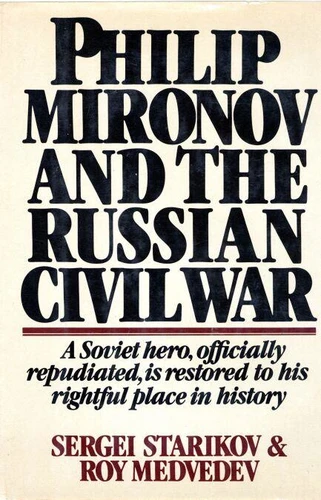
Philip Mironov and the Russian Civil War
Par :Formats :
Disponible dans votre compte client Decitre ou Furet du Nord dès validation de votre commande. Le format ePub protégé est :
- Compatible avec une lecture sur My Vivlio (smartphone, tablette, ordinateur)
- Compatible avec une lecture sur liseuses Vivlio
- Pour les liseuses autres que Vivlio, vous devez utiliser le logiciel Adobe Digital Edition. Non compatible avec la lecture sur les liseuses Kindle, Remarkable et Sony
- Non compatible avec un achat hors France métropolitaine
 , qui est-ce ?
Notre partenaire de plateforme de lecture numérique où vous retrouverez l'ensemble de vos ebooks gratuitement
Pour en savoir plus sur nos ebooks, consultez notre aide en ligne ici
C'est si simple ! Lisez votre ebook avec l'app Vivlio sur votre tablette, mobile ou ordinateur :

- Nombre de pages272
- FormatePub
- ISBN978-0-8041-5011-8
- EAN9780804150118
- Date de parution02/10/2013
- Protection num.Adobe DRM
- Taille2 Mo
- Infos supplémentairesepub
- ÉditeurKnopf
Résumé
He was an authentic hero of World War I and the Russian Revolution. He commanded a successful Red Army that treated prisoners mercifully, refrained from pillaging the countryside, and educated the people about the objectives of the Bolshevik regime. His eloquent advocacy of the ideas and aspirations of farmers and workers in the civil war period after World War I helped to weaken the cause of the White armies.
Yet Philip Mironov has been systematically defamed in official Soviet history, and today his name is remembered by very few. This Cossack leader was distrusted and even despised by the more radical Communists, removed from his army command, and tried for treason. Leon Trotsky declared him a traitor and careerist who wanted "to climb upward on the backs of the toiling masses." After being pardoned and "rehabilitated" (at least partly through Lenin's personal intervention), Mironov continued in his independent ways until he was again arrested by the Cheka (Secret Police).
While exercising in a prison courtyard in Moscow on April 2, 1921, he was mysteriously shot in the back and killed. Drawing upon archives, reminiscences, and Mironov's own brief, fragmentary, unpublished memoir, Sergi Starikov and the celebrated Soviet scholar Roy Medvedev have written a compelling book that helps explain the complex social processes of revolutionary Russia.
Yet Philip Mironov has been systematically defamed in official Soviet history, and today his name is remembered by very few. This Cossack leader was distrusted and even despised by the more radical Communists, removed from his army command, and tried for treason. Leon Trotsky declared him a traitor and careerist who wanted "to climb upward on the backs of the toiling masses." After being pardoned and "rehabilitated" (at least partly through Lenin's personal intervention), Mironov continued in his independent ways until he was again arrested by the Cheka (Secret Police).
While exercising in a prison courtyard in Moscow on April 2, 1921, he was mysteriously shot in the back and killed. Drawing upon archives, reminiscences, and Mironov's own brief, fragmentary, unpublished memoir, Sergi Starikov and the celebrated Soviet scholar Roy Medvedev have written a compelling book that helps explain the complex social processes of revolutionary Russia.