SOLDES
Jusqu'à -70% sur une sélection d'articles*

Nouveauté
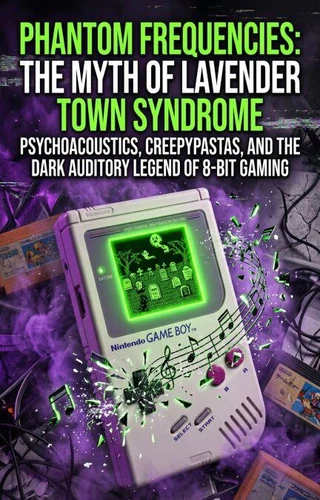
Phantom Frequencies: The Myth of Lavender Town Syndrome. Psychoacoustics, Creepypastas, and the Dark Auditory Legend of 8-Bit Gaming
Par :Formats :
Disponible dans votre compte client Decitre ou Furet du Nord dès validation de votre commande. Le format ePub est :
- Compatible avec une lecture sur My Vivlio (smartphone, tablette, ordinateur)
- Compatible avec une lecture sur liseuses Vivlio
- Pour les liseuses autres que Vivlio, vous devez utiliser le logiciel Adobe Digital Edition. Non compatible avec la lecture sur les liseuses Kindle, Remarkable et Sony
 , qui est-ce ?
Notre partenaire de plateforme de lecture numérique où vous retrouverez l'ensemble de vos ebooks gratuitement
Pour en savoir plus sur nos ebooks, consultez notre aide en ligne ici
C'est si simple ! Lisez votre ebook avec l'app Vivlio sur votre tablette, mobile ou ordinateur :

- Nombre de pages137
- FormatePub
- ISBN978-3-565-45932-2
- EAN9783565459322
- Date de parution25/05/2026
- Protection num.pas de protection
- Taille818 Ko
- Infos supplémentairesepub
- ÉditeurEmphaloz Publishing House
Résumé
Did a specific, high-frequency piece of background music in an early 1990s Japanese children's video game actually cause a wave of mass hysteria, nausea, and suicides among young players? The "Lavender Town Syndrome" remains one of the most pervasive, chilling, and fascinating urban legends in the history of internet culture and video gaming.
The legend claims that the original Japanese release of Pokémon Red and Green featured a haunting, binaural audio track in the "Lavender Town" level that contained frequencies only audible to young children, driving them to madness.
While the mass suicides are a complete internet fabrication (a "creepypasta"), the legend was born from a very real, uncomfortable truth about early sound engineering. The composer, Junichi Masuda, deliberately used atonal, high-pitch frequencies and abrupt, dissonant chords on the Game Boy's primitive sound chip to create a genuine sense of unease and anxiety, effectively weaponizing 8-bit psychoacoustics. This fascinating cultural autopsy deconstructs the boundary between sound design and folklore.
It explores the mechanics of early chiptune audio, the psychology of childhood gaming trauma, and how the early internet amplified a simple musical aesthetic choice into a terrifying global myth. Listen past the static. The Lavender Town Syndrome reveals how masterful, unsettling sound engineering can embed itself so deeply in our childhood memories that we willingly believe it possessed dark magic.
While the mass suicides are a complete internet fabrication (a "creepypasta"), the legend was born from a very real, uncomfortable truth about early sound engineering. The composer, Junichi Masuda, deliberately used atonal, high-pitch frequencies and abrupt, dissonant chords on the Game Boy's primitive sound chip to create a genuine sense of unease and anxiety, effectively weaponizing 8-bit psychoacoustics. This fascinating cultural autopsy deconstructs the boundary between sound design and folklore.
It explores the mechanics of early chiptune audio, the psychology of childhood gaming trauma, and how the early internet amplified a simple musical aesthetic choice into a terrifying global myth. Listen past the static. The Lavender Town Syndrome reveals how masterful, unsettling sound engineering can embed itself so deeply in our childhood memories that we willingly believe it possessed dark magic.