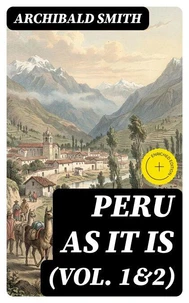
Peru as It Is
Par :Formats :
Disponible dans votre compte client Decitre ou Furet du Nord dès validation de votre commande. Le format ePub est :
- Compatible avec une lecture sur My Vivlio (smartphone, tablette, ordinateur)
- Compatible avec une lecture sur liseuses Vivlio
- Pour les liseuses autres que Vivlio, vous devez utiliser le logiciel Adobe Digital Edition. Non compatible avec la lecture sur les liseuses Kindle, Remarkable et Sony
 , qui est-ce ?
Notre partenaire de plateforme de lecture numérique où vous retrouverez l'ensemble de vos ebooks gratuitement
Pour en savoir plus sur nos ebooks, consultez notre aide en ligne ici
C'est si simple ! Lisez votre ebook avec l'app Vivlio sur votre tablette, mobile ou ordinateur :

- Nombre de pages285
- FormatePub
- ISBN859-65--4740267-1
- EAN8596547402671
- Date de parution13/11/2022
- Protection num.Digital Watermarking
- Taille578 Ko
- Infos supplémentairesepub
- ÉditeurDIGICAT
Résumé
In "Peru as It Is, " Archibald Smith offers a vivid and insightful exploration of the social, economic, and cultural landscape of 19th-century Peru. Through a blend of meticulous observation and engaging narrative style, Smith paints a comprehensive picture of Peruvian society during a period marked by significant political changes and social challenges. His use of descriptive prose effectively captures the rich tapestry of life in Peru, reflecting not only the geographical diversity but also the complex interplay between indigenous traditions and colonial legacies.
Smith's work serves as both a travelogue and a socio-political commentary, enriching the reader's understanding of a nation in transition. Archibald Smith was a keen observer of socio-political dynamics and a traveler whose experiences in South America deeply informed his writing. His background in both literature and social science enabled him to approach the subject matter with both depth and empathy.
Smith's exposure to the realities of life in Peru, coupled with his desire to illuminate the struggles and triumphs of its people, inspired him to delve into the heart of this enigmatic country, making his observations all the more poignant. This book is highly recommended for scholars, students, and anyone interested in Latin American studies or the intricacies of cultural intersections. Smith's profound insights and engaging writing style not only provide valuable historical context but also invite readers to consider the enduring legacy of colonialism and the resilience of the Peruvian people.
Smith's work serves as both a travelogue and a socio-political commentary, enriching the reader's understanding of a nation in transition. Archibald Smith was a keen observer of socio-political dynamics and a traveler whose experiences in South America deeply informed his writing. His background in both literature and social science enabled him to approach the subject matter with both depth and empathy.
Smith's exposure to the realities of life in Peru, coupled with his desire to illuminate the struggles and triumphs of its people, inspired him to delve into the heart of this enigmatic country, making his observations all the more poignant. This book is highly recommended for scholars, students, and anyone interested in Latin American studies or the intricacies of cultural intersections. Smith's profound insights and engaging writing style not only provide valuable historical context but also invite readers to consider the enduring legacy of colonialism and the resilience of the Peruvian people.