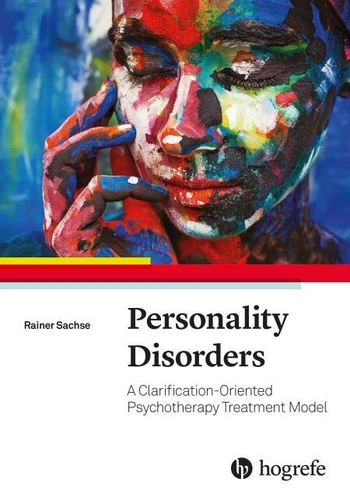
Personality Disorders. A Clarification-Oriented Psychotherapy Treatment Model
Par :Formats :
Disponible dans votre compte client Decitre ou Furet du Nord dès validation de votre commande. Le format ePub est :
- Compatible avec une lecture sur My Vivlio (smartphone, tablette, ordinateur)
- Compatible avec une lecture sur liseuses Vivlio
- Pour les liseuses autres que Vivlio, vous devez utiliser le logiciel Adobe Digital Edition. Non compatible avec la lecture sur les liseuses Kindle, Remarkable et Sony
 , qui est-ce ?
Notre partenaire de plateforme de lecture numérique où vous retrouverez l'ensemble de vos ebooks gratuitement
Pour en savoir plus sur nos ebooks, consultez notre aide en ligne ici
C'est si simple ! Lisez votre ebook avec l'app Vivlio sur votre tablette, mobile ou ordinateur :

- Nombre de pages254
- FormatePub
- ISBN978-1-61334-552-8
- EAN9781613345528
- Date de parution11/11/2019
- Protection num.Digital Watermarking
- Taille2 Mo
- Infos supplémentairesepub
- ÉditeurHogrefe Publishing
Résumé
This practice-oriented guide presents a model of personality disorders (PDs) based on the latest research showing that "pure" PDs are due to relationship disturbances. The reader gains concise and clear information about the dual-action regulation model and the framework for clarification-oriented psychotherapy, which relates the relationship dysfunction to central relationship motives and games. Practical information is given on how to behave with clients and clear therapeutic strategies based on a five-phase model are outlined to help therapists manage interactional problems in therapy and to assist clients in achieving effective change.
The eight pure personality disorders (narcissistic, histrionic, dependent, avoidant, schizoid, passive-aggressive, obsessive-compulsive, and paranoid) are each explored in detail so the reader learns about the specific features of each disorder and the associated interactional motives, dysfunctional schemas, and relationship games and tests, as well as which therapeutic approaches are appropriate for a particular PD.
As the development of a trusting therapeutic relationship is difficult with this client group, detailed strategies and tips are given throughout. This book is essential reading for clinical psychologists, psychiatrists, psychotherapists, counselors, coaches, and students.
The eight pure personality disorders (narcissistic, histrionic, dependent, avoidant, schizoid, passive-aggressive, obsessive-compulsive, and paranoid) are each explored in detail so the reader learns about the specific features of each disorder and the associated interactional motives, dysfunctional schemas, and relationship games and tests, as well as which therapeutic approaches are appropriate for a particular PD.
As the development of a trusting therapeutic relationship is difficult with this client group, detailed strategies and tips are given throughout. This book is essential reading for clinical psychologists, psychiatrists, psychotherapists, counselors, coaches, and students.
A propos de Rainer Sachse









16,99 €
19,99 €