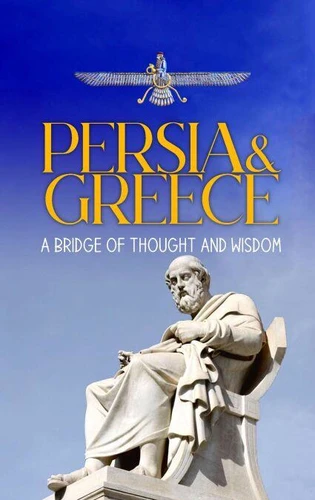
What if the foundations of Western philosophy were not born in isolation, but shaped by a forgotten dialogue between two ancient worlds?In Zarathustra and Plato: How Persia and Greece Shaped Thought, this groundbreaking work uncovers a lost intellectual bridge between the spiritual revelations of Zarathustra and the philosophical systems of Plato and the Greek thinkers who followed him. Moving beyond conventional history, the book explores how ideas once spoken in the fire temples of ancient Persia may have traveled across empires, influencing the very core of Greek philosophy.
From the cosmic dualism of Ahura Mazda and Angra Mainyu to Plato's vision of the world of forms, striking parallels emerge-parallels that challenge the assumption that civilizations developed their ideas in isolation. Through careful analysis, historical evidence, and philosophical comparison, the book traces how concepts such as moral responsibility, cosmic order, justice, and the nature of truth may have evolved through cultural exchange rather than independent invention.
The narrative takes readers across vast landscapes-from the mountains of ancient Iran to the academies of Athens-revealing a dynamic world of merchants, priests, philosophers, and empires exchanging more than goods: exchanging ideas that would shape humanity's intellectual destiny. Drawing on the works of leading scholars and ancient sources, this book presents a compelling case for a shared philosophical heritage.
It also raises provocative questions: Why did Greek philosophers rarely acknowledge these influences? Were these ideas transmitted directly, or did they travel through hidden cultural channels? Or is there something deeper-a universal pattern in human thought that connects distant civilizations?This is not just a historical investigation. It is a reexamination of how knowledge is formed, how civilizations interact, and how truth itself travels across time.
For readers of philosophy, history, and intellectual discovery, this book offers a bold and thought-provoking journey into the origins of ideas that continue to shape our world today.
What if the foundations of Western philosophy were not born in isolation, but shaped by a forgotten dialogue between two ancient worlds?In Zarathustra and Plato: How Persia and Greece Shaped Thought, this groundbreaking work uncovers a lost intellectual bridge between the spiritual revelations of Zarathustra and the philosophical systems of Plato and the Greek thinkers who followed him. Moving beyond conventional history, the book explores how ideas once spoken in the fire temples of ancient Persia may have traveled across empires, influencing the very core of Greek philosophy.
From the cosmic dualism of Ahura Mazda and Angra Mainyu to Plato's vision of the world of forms, striking parallels emerge-parallels that challenge the assumption that civilizations developed their ideas in isolation. Through careful analysis, historical evidence, and philosophical comparison, the book traces how concepts such as moral responsibility, cosmic order, justice, and the nature of truth may have evolved through cultural exchange rather than independent invention.
The narrative takes readers across vast landscapes-from the mountains of ancient Iran to the academies of Athens-revealing a dynamic world of merchants, priests, philosophers, and empires exchanging more than goods: exchanging ideas that would shape humanity's intellectual destiny. Drawing on the works of leading scholars and ancient sources, this book presents a compelling case for a shared philosophical heritage.
It also raises provocative questions: Why did Greek philosophers rarely acknowledge these influences? Were these ideas transmitted directly, or did they travel through hidden cultural channels? Or is there something deeper-a universal pattern in human thought that connects distant civilizations?This is not just a historical investigation. It is a reexamination of how knowledge is formed, how civilizations interact, and how truth itself travels across time.
For readers of philosophy, history, and intellectual discovery, this book offers a bold and thought-provoking journey into the origins of ideas that continue to shape our world today.


 , qui est-ce ?