
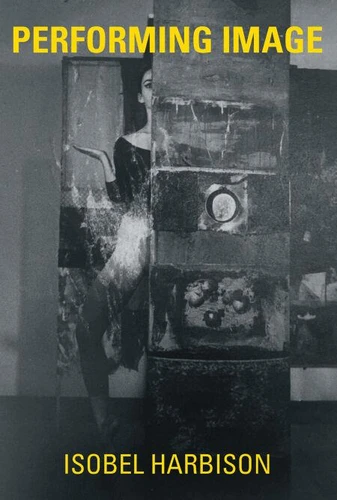
Performing Image
Par :Formats :
Disponible dans votre compte client Decitre ou Furet du Nord dès validation de votre commande. Le format ePub protégé est :
- Compatible avec une lecture sur My Vivlio (smartphone, tablette, ordinateur)
- Compatible avec une lecture sur liseuses Vivlio
- Pour les liseuses autres que Vivlio, vous devez utiliser le logiciel Adobe Digital Edition. Non compatible avec la lecture sur les liseuses Kindle, Remarkable et Sony
- Non compatible avec un achat hors France métropolitaine
 , qui est-ce ?
Notre partenaire de plateforme de lecture numérique où vous retrouverez l'ensemble de vos ebooks gratuitement
Pour en savoir plus sur nos ebooks, consultez notre aide en ligne ici
C'est si simple ! Lisez votre ebook avec l'app Vivlio sur votre tablette, mobile ou ordinateur :

- Nombre de pages256
- FormatePub
- ISBN978-0-262-35080-8
- EAN9780262350808
- Date de parution09/04/2019
- Protection num.Adobe DRM
- Taille1 Mo
- Infos supplémentairesepub
- ÉditeurThe MIT Press
Résumé
An examination of how artists have combined performance and moving image for decades, anticipating our changing relation to images in the internet era. In Performing Image, Isobel Harbison examines how artists have combined performance and moving image in their work since the 1960s, and how this work anticipates our changing relations to images since the advent of smart phones and the spread of online prosumerism.
Over this period, artists have used a variety of DIY modes of self-imaging and circulation-from home video to social media-suggesting how and why Western subjects might seek alternative platforms for self-expression and self-representation. In the course of her argument, Harbison offers close analyses of works by such artists as Robert Rauschenberg, Yvonne Rainer, Mark Leckey, Wu Tsang, and Martine Syms.
Harbison argues that while we produce images, images also produce us-those that we take and share, those that we see and assimilate through mass media and social media, those that we encounter in museums and galleries. Although all the artists she examines express their relation to images uniquely, they also offer a vantage point on today's productive-consumptive image circuits in which billions of us are caught.
This unregulated, all-encompassing image performativity, Harbison writes, puts us to work, for free, in the service of global corporate expansion. Harbison offers a three-part interpretive framework for understanding this new proximity to images as it is negotiated by these artworks, a detailed outline of a set of connected practices-and a declaration of the value of art in an economy of attention and a crisis of representation.
Over this period, artists have used a variety of DIY modes of self-imaging and circulation-from home video to social media-suggesting how and why Western subjects might seek alternative platforms for self-expression and self-representation. In the course of her argument, Harbison offers close analyses of works by such artists as Robert Rauschenberg, Yvonne Rainer, Mark Leckey, Wu Tsang, and Martine Syms.
Harbison argues that while we produce images, images also produce us-those that we take and share, those that we see and assimilate through mass media and social media, those that we encounter in museums and galleries. Although all the artists she examines express their relation to images uniquely, they also offer a vantage point on today's productive-consumptive image circuits in which billions of us are caught.
This unregulated, all-encompassing image performativity, Harbison writes, puts us to work, for free, in the service of global corporate expansion. Harbison offers a three-part interpretive framework for understanding this new proximity to images as it is negotiated by these artworks, a detailed outline of a set of connected practices-and a declaration of the value of art in an economy of attention and a crisis of representation.