SOLDES
Jusqu'à -70% sur une sélection d'articles*

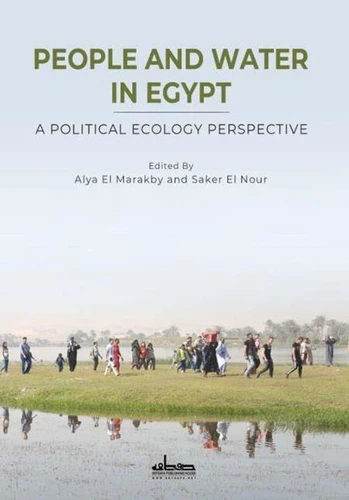
People and Water in Egypt: A Political Ecology Perspective
Par : ,Formats :
Disponible dans votre compte client Decitre ou Furet du Nord dès validation de votre commande. Le format ePub protégé est :
- Compatible avec une lecture sur My Vivlio (smartphone, tablette, ordinateur)
- Compatible avec une lecture sur liseuses Vivlio
- Pour les liseuses autres que Vivlio, vous devez utiliser le logiciel Adobe Digital Edition. Non compatible avec la lecture sur les liseuses Kindle, Remarkable et Sony
- Non compatible avec un achat hors France métropolitaine
 , qui est-ce ?
Notre partenaire de plateforme de lecture numérique où vous retrouverez l'ensemble de vos ebooks gratuitement
Pour en savoir plus sur nos ebooks, consultez notre aide en ligne ici
C'est si simple ! Lisez votre ebook avec l'app Vivlio sur votre tablette, mobile ou ordinateur :

- FormatePub
- ISBN8230281573
- EAN9798230281573
- Date de parution07/09/2024
- Protection num.Adobe DRM
- Infos supplémentairesepub
- ÉditeurIndependently Published
Résumé
This book is the outcome of a project that started in late 2018 when the dominant narrative in Egyptian media and intellectual circles was that Egypt was experiencing an unprecedented water crisis. At that moment, negotiations over the fate of Egypt's access to the Nile waters due to the construction of the Grand Ethiopian Renaissance Dam (GERD) were beginning to reach a deadlock. Talks were officially suspended in April of 2021.
At the time of writing this introduction in October 2020, the GERD's third reservoir has already been filled, and there is no sign of a legally binding agreement on how to operate the dam, particularly during drought, between the three riparian countries: Egypt, Sudan, and Ethiopia. However, the discourse around the water crisis in Egypt goes above and beyond the hydraulic dam, even if that discourse has only been heightened in the last decade due to the dam's construction.
That discourse and its multi-layered nature is the subject matter of the edited volume you are about to read. In Egypt, it has often been argued that there is a rapidly rising demand for water, one which the government cannot meet due to the tremendous pressure of population growth, financial constraints, and a "natural" problem of water scarcity. The construction of the GERD obviously added a significant layer of national anxiety surrounding Egypt's share of the Nile.
However, apart from recent transboundary water tensions, complaints about water shortages in households and irrigation canals had already been on the rise since 2007, during what was referred to by many scholars as Egypt's "thirst revolution" (El Nour et al., 2021). The Nile River basin is especially vulnerable to climate change, with greater variability, including more droughts and floods and irreversible damage to agriculture along the banks (Siam & Eltahir, 2017).
At the time of writing this introduction in October 2020, the GERD's third reservoir has already been filled, and there is no sign of a legally binding agreement on how to operate the dam, particularly during drought, between the three riparian countries: Egypt, Sudan, and Ethiopia. However, the discourse around the water crisis in Egypt goes above and beyond the hydraulic dam, even if that discourse has only been heightened in the last decade due to the dam's construction.
That discourse and its multi-layered nature is the subject matter of the edited volume you are about to read. In Egypt, it has often been argued that there is a rapidly rising demand for water, one which the government cannot meet due to the tremendous pressure of population growth, financial constraints, and a "natural" problem of water scarcity. The construction of the GERD obviously added a significant layer of national anxiety surrounding Egypt's share of the Nile.
However, apart from recent transboundary water tensions, complaints about water shortages in households and irrigation canals had already been on the rise since 2007, during what was referred to by many scholars as Egypt's "thirst revolution" (El Nour et al., 2021). The Nile River basin is especially vulnerable to climate change, with greater variability, including more droughts and floods and irreversible damage to agriculture along the banks (Siam & Eltahir, 2017).