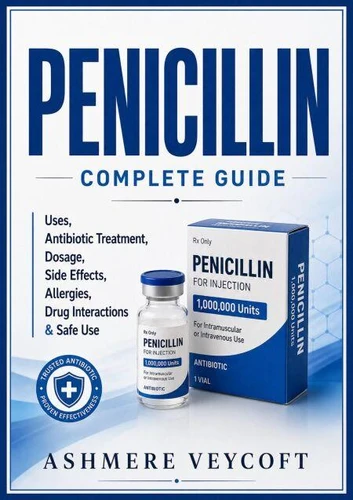
PENICILLIN Complete Guide: Uses, Antibiotic Treatment, Dosage, Side Effects, Allergies, Drug Interactions & Safe Use
Penicillin changed the history of medicine and remains one of the most important antibiotics ever discovered. Even after decades of clinical use, many people still have questions about how penicillin works, when it should be used, how it should be taken, and what risks should be considered before treatment begins.
This comprehensive guide provides a clear and practical explanation of penicillin without relying on overly technical language.
It explains how penicillin targets bacterial infections, why it does not treat viral illnesses, and how healthcare professionals determine the most appropriate treatment plan. The book also examines the discovery of penicillin, the different types of penicillin antibiotics, and the growing challenge of antibiotic resistance.
Inside this guide, you will learn about dosage recommendations, administration guidelines, food and medication interactions, common and uncommon side effects, allergic reactions, and important safety precautions.
Special chapters examine the use of penicillin during pregnancy, breastfeeding, childhood, and older adulthood while also addressing medical conditions that may require additional monitoring.
Frequently asked questions are answered in a straightforward and evidence based manner, helping you understand when antibiotics are necessary, why treatment should be completed, and how to recognize symptoms that require medical attention.
Whether you have been prescribed penicillin, care for someone receiving treatment, or simply want to understand one of the world's most important medications, this guide provides practical information to support safer and more informed healthcare decisions.
PENICILLIN Complete Guide: Uses, Antibiotic Treatment, Dosage, Side Effects, Allergies, Drug Interactions & Safe Use
Penicillin changed the history of medicine and remains one of the most important antibiotics ever discovered. Even after decades of clinical use, many people still have questions about how penicillin works, when it should be used, how it should be taken, and what risks should be considered before treatment begins.
This comprehensive guide provides a clear and practical explanation of penicillin without relying on overly technical language.
It explains how penicillin targets bacterial infections, why it does not treat viral illnesses, and how healthcare professionals determine the most appropriate treatment plan. The book also examines the discovery of penicillin, the different types of penicillin antibiotics, and the growing challenge of antibiotic resistance.
Inside this guide, you will learn about dosage recommendations, administration guidelines, food and medication interactions, common and uncommon side effects, allergic reactions, and important safety precautions.
Special chapters examine the use of penicillin during pregnancy, breastfeeding, childhood, and older adulthood while also addressing medical conditions that may require additional monitoring.
Frequently asked questions are answered in a straightforward and evidence based manner, helping you understand when antibiotics are necessary, why treatment should be completed, and how to recognize symptoms that require medical attention.
Whether you have been prescribed penicillin, care for someone receiving treatment, or simply want to understand one of the world's most important medications, this guide provides practical information to support safer and more informed healthcare decisions.