
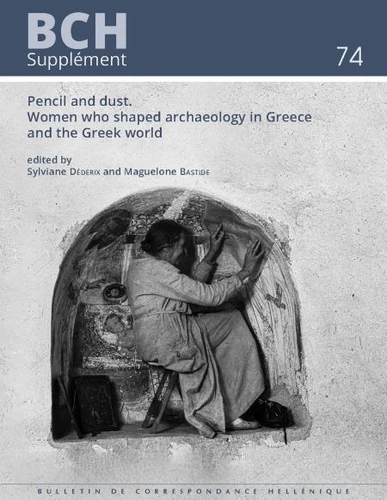
Pencil and Dust. Women who shaped archaeology in Greece and the Greek world
Par : ,Formats :
Disponible dans votre compte client Decitre ou Furet du Nord dès validation de votre commande. Le format Multi-format est :
- Pour les liseuses autres que Vivlio, vous devez utiliser le logiciel Adobe Digital Edition. Non compatible avec la lecture sur les liseuses Kindle, Remarkable et Sony
 , qui est-ce ?
Notre partenaire de plateforme de lecture numérique où vous retrouverez l'ensemble de vos ebooks gratuitement
Pour en savoir plus sur nos ebooks, consultez notre aide en ligne ici
C'est si simple ! Lisez votre ebook avec l'app Vivlio sur votre tablette, mobile ou ordinateur :

- Nombre de pages564
- FormatMulti-format
- ISBN978-2-86958-704-5
- EAN9782869587045
- Date de parution23/03/2026
- Protection num.pas de protection
- Infos supplémentairesMulti-Format
- ÉditeurÉcole française d’Athènes
Résumé
The history of archaeology - particularly Classical archaeology - has long been written as a men's story, obscuring the crucial role played by women. Focusing on Greece and the wider Greek world, Pencil and dust restores women's place in historiography by highlighting their contributions to excavations, the study of finds, and the development of methods and theory. The professionalisation of archaeology in the late nineteenth century brought about the marginalisation of women, who were relegated to the role of skilled but invisibilised - and unpaid - assistants.
Yet pencil in hand, they recorded, drew, corrected, and refined archaeological knowledge. As their access to education expanded, women gradually claimed new spaces, from storerooms and museums to the field itself. Hands in the dust, these pioneers challenged gender norms while facing resistance and institutional barriers. Through biographical and thematic case studies, this volume brings their fragile, often erased legacy back into view and contributes to a more inclusive history of archaeology.
Yet pencil in hand, they recorded, drew, corrected, and refined archaeological knowledge. As their access to education expanded, women gradually claimed new spaces, from storerooms and museums to the field itself. Hands in the dust, these pioneers challenged gender norms while facing resistance and institutional barriers. Through biographical and thematic case studies, this volume brings their fragile, often erased legacy back into view and contributes to a more inclusive history of archaeology.