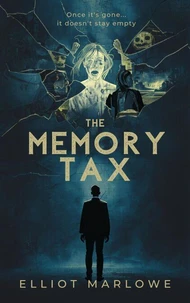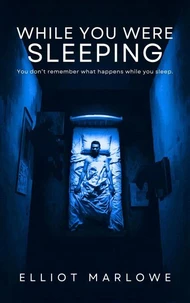



Elliott Marlowe writes psychological horror that lingers long after the final page. His work explores the fragile boundaries between memory and reality, identity and perception-where the mind becomes both the observer and the prison. Known for slow-building dread and deeply immersive narratives, Marlowe's stories do not rely on shock, but on the quiet, unsettling realization that something is fundamentally wrong.
and has been for far longer than anyone noticed. Drawing on themes of dissociation, repetition, and psychological entrapment, his novels often blur the line between the internal and external world. Characters are not simply haunted by places-but by patterns they cannot escape, and truths they cannot fully remember. Marlowe's writing is defined by atmosphere, control, and precision. Every detail matters.
Every moment builds. And nothing is ever as simple as it first appears. He does not write stories about what goes bump in the night. He writes about what was already there-waiting.
and has been for far longer than anyone noticed. Drawing on themes of dissociation, repetition, and psychological entrapment, his novels often blur the line between the internal and external world. Characters are not simply haunted by places-but by patterns they cannot escape, and truths they cannot fully remember. Marlowe's writing is defined by atmosphere, control, and precision. Every detail matters.
Every moment builds. And nothing is ever as simple as it first appears. He does not write stories about what goes bump in the night. He writes about what was already there-waiting.