
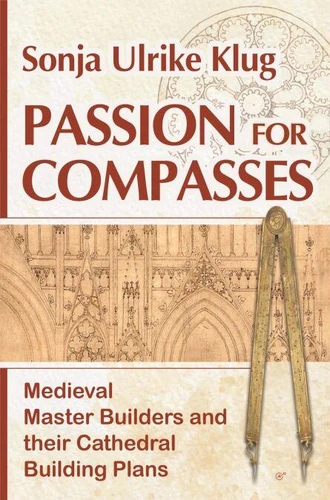
Passion for Compasses. Medieval Master Builders and their Cathedral Building Plans
Par :Formats :
Disponible dans votre compte client Decitre ou Furet du Nord dès validation de votre commande. Le format ePub est :
- Compatible avec une lecture sur My Vivlio (smartphone, tablette, ordinateur)
- Compatible avec une lecture sur liseuses Vivlio
- Pour les liseuses autres que Vivlio, vous devez utiliser le logiciel Adobe Digital Edition. Non compatible avec la lecture sur les liseuses Kindle, Remarkable et Sony
 , qui est-ce ?
Notre partenaire de plateforme de lecture numérique où vous retrouverez l'ensemble de vos ebooks gratuitement
Pour en savoir plus sur nos ebooks, consultez notre aide en ligne ici
C'est si simple ! Lisez votre ebook avec l'app Vivlio sur votre tablette, mobile ou ordinateur :

- Nombre de pages260
- FormatePub
- ISBN978-3-910321-21-2
- EAN9783910321212
- Date de parution06/06/2026
- Protection num.Digital Watermarking
- Taille4 Mo
- Infos supplémentairesepub
- ÉditeurKluges Verlag
Résumé
The architectural history of the Middle Ages is full of surprises
It is hard to imagine today that relatively few construction plans have been found for the impressive churches and cathedrals of the Romanesque and Gothic periods. Where did most of the drawings go? Were the plans destroyed or lost over time? Or were they never made at all? Although there were very few architectural drawings, there were numerous compasses.
What were they used for and how? Was it possible to design complex buildings such as churches and cathedrals without blueprints? The author takes the readers on an exciting cultural and historical journey through time She looks at the spread of papyrus, parchment and paper and traces the ability to write and calculate in Europe. She also looks at the construction process in historical illustrations and draws comparisons with Arabic architecture.
Finally, the author presents the various types of compasses that were available and explains how the drawing skills of master builders developed. These insights into the history of architecture lead to some surprising discoveries: Medieval architects thought and planned very differently than we do today.
What were they used for and how? Was it possible to design complex buildings such as churches and cathedrals without blueprints? The author takes the readers on an exciting cultural and historical journey through time She looks at the spread of papyrus, parchment and paper and traces the ability to write and calculate in Europe. She also looks at the construction process in historical illustrations and draws comparisons with Arabic architecture.
Finally, the author presents the various types of compasses that were available and explains how the drawing skills of master builders developed. These insights into the history of architecture lead to some surprising discoveries: Medieval architects thought and planned very differently than we do today.