SOLDES
Jusqu'à -70% sur une sélection d'articles*

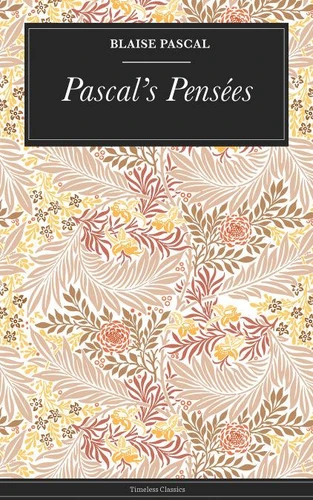
Pascal's Pensées
Par :Formats :
Disponible dans votre compte client Decitre ou Furet du Nord dès validation de votre commande. Le format ePub est :
- Compatible avec une lecture sur My Vivlio (smartphone, tablette, ordinateur)
- Compatible avec une lecture sur liseuses Vivlio
- Pour les liseuses autres que Vivlio, vous devez utiliser le logiciel Adobe Digital Edition. Non compatible avec la lecture sur les liseuses Kindle, Remarkable et Sony
 , qui est-ce ?
Notre partenaire de plateforme de lecture numérique où vous retrouverez l'ensemble de vos ebooks gratuitement
Pour en savoir plus sur nos ebooks, consultez notre aide en ligne ici
C'est si simple ! Lisez votre ebook avec l'app Vivlio sur votre tablette, mobile ou ordinateur :

- FormatePub
- ISBN978-2-49677-116-9
- EAN9782496771169
- Date de parution01/01/2026
- Protection num.pas de protection
- Infos supplémentairesepub
- ÉditeurTimeless Classics
Résumé
Discover the Profound Reflections of Pascal's Pensées: A Timeless Exploration of Faith and ReasonPascal's Pensées is a masterful collection of philosophical and theological reflections by Blaise Pascal, one of the most influential thinkers of the 17th century. This seminal work delves into the complexities of human nature, the existence of God, and the tension between faith and reason. Through poignant aphorisms and profound insights, Pascal invites readers to contemplate the limitations of human understanding and the importance of spiritual belief.
The Pensées, meaning "thoughts" in French, was compiled posthumously from Pascal's notes and fragments, offering a window into his inner struggles and intellectual pursuits. It challenges readers to consider the paradoxes of existence, the necessity of faith, and the humility required to accept life's mysteries. Whether approached as a philosophical treatise or a spiritual guide, Pascal's Pensées remains a compelling work that continues to resonate across centuries, inspiring introspection and dialogue about the nature of belief and the human condition.
Blaise Pascal (1623-1662) was a French mathematician, physicist, inventor, and philosopher. Renowned for his contributions to mathematics, including Pascal's Triangle and foundational work in probability theory, he was also a devout Christian whose faith profoundly influenced his writings. Pascal's intellectual pursuits spanned multiple disciplines, reflecting his curiosity and depth of thought. His religious writings, especially the Pensées, reveal a man grappling with doubt, faith, and the search for truth.
Despite his relatively short life, Pascal's legacy endures through his innovative ideas and his ability to bridge science and spirituality, making him a pivotal figure in both scientific and philosophical history.
The Pensées, meaning "thoughts" in French, was compiled posthumously from Pascal's notes and fragments, offering a window into his inner struggles and intellectual pursuits. It challenges readers to consider the paradoxes of existence, the necessity of faith, and the humility required to accept life's mysteries. Whether approached as a philosophical treatise or a spiritual guide, Pascal's Pensées remains a compelling work that continues to resonate across centuries, inspiring introspection and dialogue about the nature of belief and the human condition.
Blaise Pascal (1623-1662) was a French mathematician, physicist, inventor, and philosopher. Renowned for his contributions to mathematics, including Pascal's Triangle and foundational work in probability theory, he was also a devout Christian whose faith profoundly influenced his writings. Pascal's intellectual pursuits spanned multiple disciplines, reflecting his curiosity and depth of thought. His religious writings, especially the Pensées, reveal a man grappling with doubt, faith, and the search for truth.
Despite his relatively short life, Pascal's legacy endures through his innovative ideas and his ability to bridge science and spirituality, making him a pivotal figure in both scientific and philosophical history.