SOLDES
Jusqu'à -70% sur une sélection d'articles*

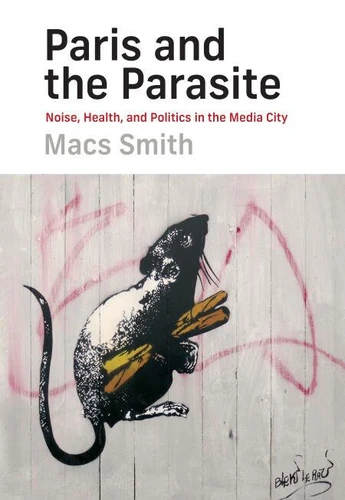
Paris and the Parasite : Noise, Health, and Politics in the Media City /anglais
Par :Formats :
Disponible dans votre compte client Decitre ou Furet du Nord dès validation de votre commande. Le format ePub protégé est :
- Compatible avec une lecture sur My Vivlio (smartphone, tablette, ordinateur)
- Compatible avec une lecture sur liseuses Vivlio
- Pour les liseuses autres que Vivlio, vous devez utiliser le logiciel Adobe Digital Edition. Non compatible avec la lecture sur les liseuses Kindle, Remarkable et Sony
- Non compatible avec un achat hors France métropolitaine
 , qui est-ce ?
Notre partenaire de plateforme de lecture numérique où vous retrouverez l'ensemble de vos ebooks gratuitement
Pour en savoir plus sur nos ebooks, consultez notre aide en ligne ici
C'est si simple ! Lisez votre ebook avec l'app Vivlio sur votre tablette, mobile ou ordinateur :

- Nombre de pages296
- FormatePub
- ISBN978-0-262-36255-9
- EAN9780262362559
- Date de parution08/06/2021
- Protection num.Adobe DRM
- Taille5 Mo
- Infos supplémentairesepub
- ÉditeurThe MIT Press
Résumé
The social consequences of anti-parasitic urbanism, as efforts to expunge supposedly biological parasites penalize those viewed as social parasites. According to French philosopher Michel Serres, ordered systems are founded on the pathologization of parasites, which can never be fully expelled. In Paris and the Parasite, Macs Smith extends Serres's approach to Paris as a mediatic city, asking what organisms, people, and forms of interference constitute its parasites.
Drawing on French poststructuralist theory and philosophy, media theory, the philosophy of science, and an array of literary and cultural sources, he examines Paris and its parasites from the early nineteenth century to today, focusing on the contemporary city. In so doing, he reveals the social consequences of anti-parasitic urbanism.
Drawing on French poststructuralist theory and philosophy, media theory, the philosophy of science, and an array of literary and cultural sources, he examines Paris and its parasites from the early nineteenth century to today, focusing on the contemporary city. In so doing, he reveals the social consequences of anti-parasitic urbanism.