
Silvia Balatti is currently an Assistant Professor at the Institute of Classics, Kiel University. Research interests: the history of Ancient Iran and the Ancient Near East from the Neo-Assyrian period onwards.
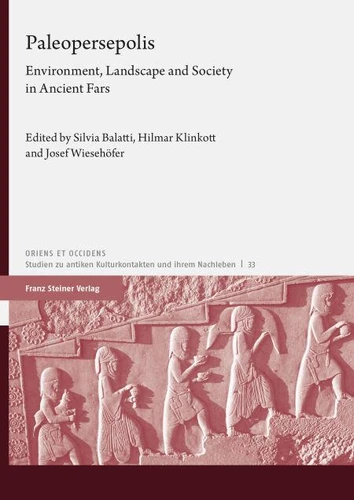
Paleopersepolis. Environment, Landscape and Society in Ancient Fars
Par :Formats :
Disponible dans votre compte client Decitre ou Furet du Nord dès validation de votre commande. Le format PDF est :
- Compatible avec une lecture sur My Vivlio (smartphone, tablette, ordinateur)
- Compatible avec une lecture sur liseuses Vivlio
- Pour les liseuses autres que Vivlio, vous devez utiliser le logiciel Adobe Digital Edition. Non compatible avec la lecture sur les liseuses Kindle, Remarkable et Sony
 , qui est-ce ?
Notre partenaire de plateforme de lecture numérique où vous retrouverez l'ensemble de vos ebooks gratuitement
Pour en savoir plus sur nos ebooks, consultez notre aide en ligne ici
C'est si simple ! Lisez votre ebook avec l'app Vivlio sur votre tablette, mobile ou ordinateur :

- Nombre de pages313
- FormatPDF
- ISBN978-3-515-12629-8
- EAN9783515126298
- Date de parution30/04/2021
- Protection num.Digital Watermarking
- Taille6 Mo
- Infos supplémentairespdf
- ÉditeurFranz Steiner
Résumé
Parsa, approximately corresponding to the modern-day Iranian province of Fars, can reasonably be considered to occupy a prominent place in the history of Ancient Iran. Indeed, it was the heartland of the Persian empires of the Teispids, Achaemenids and Sasanians. The spectacular archaeological remains of Fars are well known - we need only think, for example, of the monumental remains of Persepolis.
Much less is known about life outside of the royal palaces and about human-environment interactions in this region. In recent decades, a new interest in socio-environmental issues in the humanities, the use of innovative scientific methods in archaeology, and the rapid expansion of the field of paleoenvironmental studies have vastly increased the potential for investigating this topic from an interdisciplinary perspective.
The contributions to this volume are the result of a scholarly effort to investigate the landscape and society of ancient Fars using an integrative approach, which benefits from the contributions from the humanities and the natural and technological sciences.
Much less is known about life outside of the royal palaces and about human-environment interactions in this region. In recent decades, a new interest in socio-environmental issues in the humanities, the use of innovative scientific methods in archaeology, and the rapid expansion of the field of paleoenvironmental studies have vastly increased the potential for investigating this topic from an interdisciplinary perspective.
The contributions to this volume are the result of a scholarly effort to investigate the landscape and society of ancient Fars using an integrative approach, which benefits from the contributions from the humanities and the natural and technological sciences.