
Author
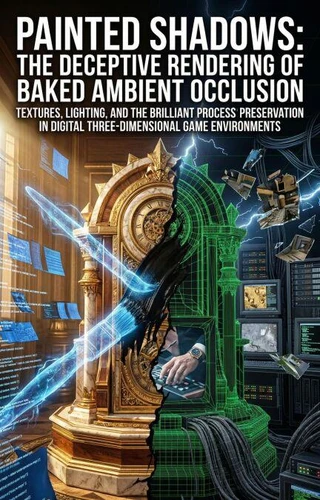
Painted Shadows: The Deceptive Rendering of Baked Ambient Occlusion. Textures, Lighting, and the Brilliant Processor Preservation in Digital Three-Dimensional Game Environments
Par :Formats :
Disponible dans votre compte client Decitre ou Furet du Nord dès validation de votre commande. Le format ePub est :
- Compatible avec une lecture sur My Vivlio (smartphone, tablette, ordinateur)
- Compatible avec une lecture sur liseuses Vivlio
- Pour les liseuses autres que Vivlio, vous devez utiliser le logiciel Adobe Digital Edition. Non compatible avec la lecture sur les liseuses Kindle, Remarkable et Sony
 , qui est-ce ?
Notre partenaire de plateforme de lecture numérique où vous retrouverez l'ensemble de vos ebooks gratuitement
Pour en savoir plus sur nos ebooks, consultez notre aide en ligne ici
C'est si simple ! Lisez votre ebook avec l'app Vivlio sur votre tablette, mobile ou ordinateur :

- Nombre de pages174
- FormatePub
- ISBN978-3-565-36770-2
- EAN9783565367702
- Date de parution28/03/2026
- Protection num.pas de protection
- Taille944 Ko
- Infos supplémentairesepub
- ÉditeurEmphaloz Publishing House
Résumé
When you walk into a dimly lit, atmospheric room in a classic 3D video game, the shadows gathering in the corners and under the furniture look incredibly realistic. You assume the game console is calculating the complex behavior of light bouncing around the room. In reality, the console is doing absolutely nothing. The shadows are completely fake.
Calculating real-time light bounces requires immense processing power that early hardware simply did not possess.
To create the illusion of depth, developers utilized Baked Ambient Occlusion. This ingenious technique involves having powerful studio computers calculate the lighting physics months before the game is released. The developers then literally paint those pre-calculated shadows directly onto the 2D texture "wallpaper" of the 3D objects. This technical analysis explores the smoke and mirrors of digital rendering.
We dissect how programmers tricked the human eye into perceiving complex geometry and lighting without forcing the player's hardware to spend a single megabyte of RAM. Unmask the illusions of digital worlds. Learn how the smartest engineers solved impossible physics problems with the digital equivalent of a paintbrush.
To create the illusion of depth, developers utilized Baked Ambient Occlusion. This ingenious technique involves having powerful studio computers calculate the lighting physics months before the game is released. The developers then literally paint those pre-calculated shadows directly onto the 2D texture "wallpaper" of the 3D objects. This technical analysis explores the smoke and mirrors of digital rendering.
We dissect how programmers tricked the human eye into perceiving complex geometry and lighting without forcing the player's hardware to spend a single megabyte of RAM. Unmask the illusions of digital worlds. Learn how the smartest engineers solved impossible physics problems with the digital equivalent of a paintbrush.