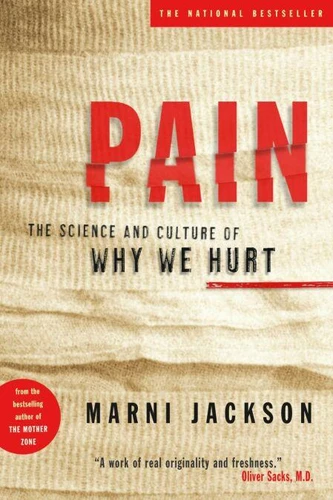
Pain. The Science and Culture of Why We Hurt
Par :Formats :
Disponible dans votre compte client Decitre ou Furet du Nord dès validation de votre commande. Le format ePub protégé est :
- Compatible avec une lecture sur My Vivlio (smartphone, tablette, ordinateur)
- Compatible avec une lecture sur liseuses Vivlio
- Pour les liseuses autres que Vivlio, vous devez utiliser le logiciel Adobe Digital Edition. Non compatible avec la lecture sur les liseuses Kindle, Remarkable et Sony
- Non compatible avec un achat hors France métropolitaine
 , qui est-ce ?
Notre partenaire de plateforme de lecture numérique où vous retrouverez l'ensemble de vos ebooks gratuitement
Pour en savoir plus sur nos ebooks, consultez notre aide en ligne ici
C'est si simple ! Lisez votre ebook avec l'app Vivlio sur votre tablette, mobile ou ordinateur :

- Nombre de pages384
- FormatePub
- ISBN978-0-307-36962-8
- EAN9780307369628
- Date de parution18/06/2010
- Protection num.Adobe DRM
- Taille2 Mo
- Infos supplémentairesepub
- ÉditeurVintage Canada
Résumé
A compulsively readable explorer's journal of the hidden territory of pain, as profound and insightful as the work of Oliver Sacks and Sherwin Nuland. A bee sting on the lips was the tiny lance that set Marni Jackson off on a four-year exploration of the many ways in which we suffer. Exiled for an afternoon in the country called pain, she realized that no one had the words to describe her condition although it was as familiar as a headache.
A fusion of emotion, nerve and memory, pain inspired only questions."Why do we still distinguish between mental pain and physical pain, " she asks, "when pain is always an emotional experience? Why is pain so poorly understood, especially in a century of self-scrutiny? Hasn't anyone noticed the embarrassing fact that science is about to clone a human being but still can't cure the pain of a bad back?" North Americans spend $24 billion a year on pain relief while chronic pain is on the rise.
If pain is the reason why most people visit the doctor, why are most doctors so bad at addressing the problem of suffering?Pain: The Fifth Vital Sign dives back into the history of pain and forward into the possibilities of pain genetics, bringing us stories of both people in pain and the pain pioneers: eccentrics and artists, wrestlers and writers, ministers and mothers, psychologists and philosophers, nurses and doctors.
Marni Jackson has created a definitive, heartfelt, funny and beguiling portrait of a condition we can't live with - and can't live without.
A fusion of emotion, nerve and memory, pain inspired only questions."Why do we still distinguish between mental pain and physical pain, " she asks, "when pain is always an emotional experience? Why is pain so poorly understood, especially in a century of self-scrutiny? Hasn't anyone noticed the embarrassing fact that science is about to clone a human being but still can't cure the pain of a bad back?" North Americans spend $24 billion a year on pain relief while chronic pain is on the rise.
If pain is the reason why most people visit the doctor, why are most doctors so bad at addressing the problem of suffering?Pain: The Fifth Vital Sign dives back into the history of pain and forward into the possibilities of pain genetics, bringing us stories of both people in pain and the pain pioneers: eccentrics and artists, wrestlers and writers, ministers and mothers, psychologists and philosophers, nurses and doctors.
Marni Jackson has created a definitive, heartfelt, funny and beguiling portrait of a condition we can't live with - and can't live without.