SOLDES
Jusqu'à -70% sur une sélection d'articles*

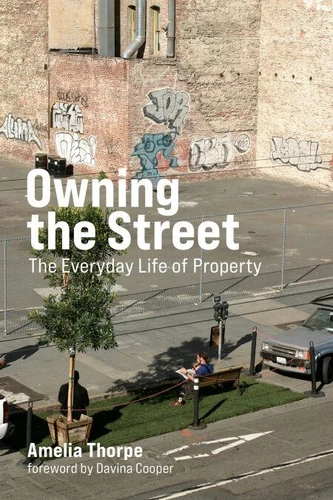
Owning the Street The Everyday Life of Property /anglais
Par :Formats :
Disponible dans votre compte client Decitre ou Furet du Nord dès validation de votre commande. Le format ePub protégé est :
- Compatible avec une lecture sur My Vivlio (smartphone, tablette, ordinateur)
- Compatible avec une lecture sur liseuses Vivlio
- Pour les liseuses autres que Vivlio, vous devez utiliser le logiciel Adobe Digital Edition. Non compatible avec la lecture sur les liseuses Kindle, Remarkable et Sony
- Non compatible avec un achat hors France métropolitaine
 , qui est-ce ?
Notre partenaire de plateforme de lecture numérique où vous retrouverez l'ensemble de vos ebooks gratuitement
Pour en savoir plus sur nos ebooks, consultez notre aide en ligne ici
C'est si simple ! Lisez votre ebook avec l'app Vivlio sur votre tablette, mobile ou ordinateur :

- Nombre de pages344
- FormatePub
- ISBN978-0-262-36091-3
- EAN9780262360913
- Date de parution15/12/2020
- Protection num.Adobe DRM
- Taille7 Mo
- Infos supplémentairesepub
- ÉditeurThe MIT Press
Résumé
How local, specific, and personal understandings about belonging, ownership, and agency intersect with law to shape the city. In Owning the Street, Amelia Thorpe examines everyday experiences of and feelings about property and belonging in contemporary cities. She grounds her account in an empirical study of PARK(ing) Day, an annual event that reclaims street space from cars. A popular and highly recognizable example of DIY Urbanism, PARK(ing) Day has attracted considerable media attention, but has not yet been the subject of close scholarly examination.
Focusing on the event's trajectories in San Francisco, Sydney, and Montreal, Thorpe addresses this gap, making use of extensive interview data, field work, and careful reflection to explore these tiny, temporary, and often transformative interventions. PARK(ing) Day is based on a creative interpretation of the property producible by paying a parking meter. Paying a meter, the event's organizers explained, amounts to taking out a lease on the space; while most "lessees" use that property to store a car, the space could be put to other uses-engaging politics (a free health clinic for migrant workers, a same sex wedding, a protest against fossil fuels) and play (a dance floor, giant Jenga, a pocket park).
Through this novel rereading of everyday regulation, PARK(ing) Day provides an example of the connection between belief and action-a connection at the heart of Thorpe's argument. Thorpe examines ways in which local, personal, and materially grounded understandings about belonging, ownership, and agency intersect with law to shape the city. Her analysis offers insights into the ways in which citizens can shape the governance of urban space, particularly in contested environments. The book's foreword is by Davina Cooper, Research Professor in Law at King's College London.
Focusing on the event's trajectories in San Francisco, Sydney, and Montreal, Thorpe addresses this gap, making use of extensive interview data, field work, and careful reflection to explore these tiny, temporary, and often transformative interventions. PARK(ing) Day is based on a creative interpretation of the property producible by paying a parking meter. Paying a meter, the event's organizers explained, amounts to taking out a lease on the space; while most "lessees" use that property to store a car, the space could be put to other uses-engaging politics (a free health clinic for migrant workers, a same sex wedding, a protest against fossil fuels) and play (a dance floor, giant Jenga, a pocket park).
Through this novel rereading of everyday regulation, PARK(ing) Day provides an example of the connection between belief and action-a connection at the heart of Thorpe's argument. Thorpe examines ways in which local, personal, and materially grounded understandings about belonging, ownership, and agency intersect with law to shape the city. Her analysis offers insights into the ways in which citizens can shape the governance of urban space, particularly in contested environments. The book's foreword is by Davina Cooper, Research Professor in Law at King's College London.