SOLDES
Jusqu'à -70% sur une sélection d'articles*

Nouveauté
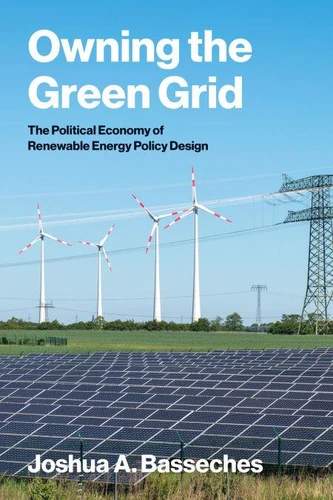
Owning the Green Grid. The Political Economy of Renewable Energy Policy Design
Par :Formats :
Disponible dans votre compte client Decitre ou Furet du Nord dès validation de votre commande. Le format ePub protégé est :
- Compatible avec une lecture sur My Vivlio (smartphone, tablette, ordinateur)
- Compatible avec une lecture sur liseuses Vivlio
- Pour les liseuses autres que Vivlio, vous devez utiliser le logiciel Adobe Digital Edition. Non compatible avec la lecture sur les liseuses Kindle, Remarkable et Sony
- Non compatible avec un achat hors France métropolitaine
 , qui est-ce ?
Notre partenaire de plateforme de lecture numérique où vous retrouverez l'ensemble de vos ebooks gratuitement
Pour en savoir plus sur nos ebooks, consultez notre aide en ligne ici
C'est si simple ! Lisez votre ebook avec l'app Vivlio sur votre tablette, mobile ou ordinateur :

- Nombre de pages260
- FormatePub
- ISBN978-0-262-05360-0
- EAN9780262053600
- Date de parution23/06/2026
- Protection num.Adobe DRM
- Taille9 Mo
- Infos supplémentairesepub
- ÉditeurThe MIT Press
Résumé
How corporate ownership of the electricity grid matters to state-level renewable energy policymaking. Historically (and for the foreseeable future), most public policy action in the United States to combat the global climate crisis has taken place at the state level. Former President Joe Biden's administration marked a significant departure from that trend, as his policies pursued a strategy of "electrify everything" (transportation, buildings, and industry).
But who owns the electricity system that is the linchpin of such a strategy, and how does this ownership affect the policy preferences of interest groups at the state level? Owning the Green Grid addresses these questions and more through an in-depth study of a quarter century of renewable electricity policymaking in seven states. Drawing on legislative and regulatory texts, interviews, and archival material, Joshua Basseches shows how the investor-owned utilities (IOUs) that provide electricity to three-fourths of the country have succeeded in designing policies that serve environmental aims sometimes but these companies' shareholders always.
Grappling with the impact of political partisanship and in-state energy economy, the author finds that although these factors do matter, it is the structure of a state's utility sector that has the most consistent impact on the interest group politics of these policies. The book offers lessons for the politics of the clean energy transition going forward, and while those related to corporate political power may be troubling, others provide hope that climate politics need not be as polarized as it is perceived to be today.
But who owns the electricity system that is the linchpin of such a strategy, and how does this ownership affect the policy preferences of interest groups at the state level? Owning the Green Grid addresses these questions and more through an in-depth study of a quarter century of renewable electricity policymaking in seven states. Drawing on legislative and regulatory texts, interviews, and archival material, Joshua Basseches shows how the investor-owned utilities (IOUs) that provide electricity to three-fourths of the country have succeeded in designing policies that serve environmental aims sometimes but these companies' shareholders always.
Grappling with the impact of political partisanship and in-state energy economy, the author finds that although these factors do matter, it is the structure of a state's utility sector that has the most consistent impact on the interest group politics of these policies. The book offers lessons for the politics of the clean energy transition going forward, and while those related to corporate political power may be troubling, others provide hope that climate politics need not be as polarized as it is perceived to be today.