SOLDES
Jusqu'à -70% sur une sélection d'articles*

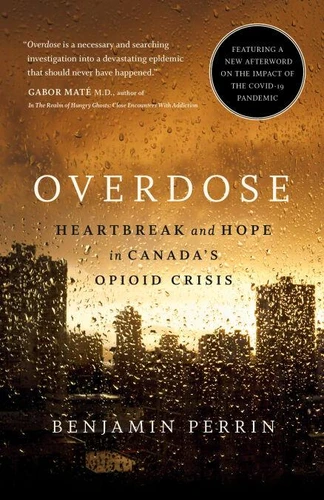
Overdose. Heartbreak and Hope in Canada's Opioid Crisis
Par :Formats :
Disponible dans votre compte client Decitre ou Furet du Nord dès validation de votre commande. Le format ePub protégé est :
- Compatible avec une lecture sur My Vivlio (smartphone, tablette, ordinateur)
- Compatible avec une lecture sur liseuses Vivlio
- Pour les liseuses autres que Vivlio, vous devez utiliser le logiciel Adobe Digital Edition. Non compatible avec la lecture sur les liseuses Kindle, Remarkable et Sony
- Non compatible avec un achat hors France métropolitaine
 , qui est-ce ?
Notre partenaire de plateforme de lecture numérique où vous retrouverez l'ensemble de vos ebooks gratuitement
Pour en savoir plus sur nos ebooks, consultez notre aide en ligne ici
C'est si simple ! Lisez votre ebook avec l'app Vivlio sur votre tablette, mobile ou ordinateur :

- Nombre de pages304
- FormatePub
- ISBN978-0-7352-3787-2
- EAN9780735237872
- Date de parution31/03/2020
- Protection num.Adobe DRM
- Taille3 Mo
- Infos supplémentairesepub
- ÉditeurViking
Résumé
NATIONAL BESTSELLERSHORTLISTED for the 2021 BC Book Awards' George Ryga Award for Social Awareness in LiteratureSHORTLISTED for the BC and Yukon Book Prizes, for both the Hubert Evans Non-Fiction Prize and Jim Deva Prize for Writing That ProvokesSHORTLISTED for the 2021 J. W. Dafoe Book PrizeSHORTLISTED for the 2020 Lane Anderson Award"Overdose is a necessary and searching investigation into a devastating epidemic that should never have happened.
Benjamin Perrin painstakingly shows that it need not continue if we, as a society, heed the evidence."-Gabor Maté M. D., author of In The Realm of Hungry Ghosts: Close Encounters With AddictionAn astonishing and powerful look at the ongoing opioid crisis North America is in the middle of a health emergency. Life expectancies are declining. Someone is dying every two hours in Canada from illicit drug overdose.
Fentanyl has become a looming presence-an opioid more powerful, pervasive, and deadly than any previous street drug. The victims are many-and often not whom we might expect. They include the poor and forgotten but also our neighbours: professionals, students, and parents. Despite the thousands of deaths, these victims have remained largely invisible. But not anymore. Benjamin Perrin, a law and policy expert, shines a light in this darkest of corners-and his findings challenge many assumptions about the crisis.
Why do people use drugs despite the risk of overdosing? Can we crack down on the fentanyl supply? Do supervised consumption sites and providing "safe drugs" enable the problem? Which treatments work? Would decriminalizing all drugs help or do further harm? In this urgent and humane look at a devastating epidemic, Perrin draws on behind-the-scenes interviews with those on the frontlines, including undercover police officers, intelligence analysts, border agents, prosecutors, healthcare professionals, Indigenous organizations, activists, and people who use drugs.
Not only does he unveil the many complexities of this situation, but he also offers a new way forward-one that may save thousands of lives.
Benjamin Perrin painstakingly shows that it need not continue if we, as a society, heed the evidence."-Gabor Maté M. D., author of In The Realm of Hungry Ghosts: Close Encounters With AddictionAn astonishing and powerful look at the ongoing opioid crisis North America is in the middle of a health emergency. Life expectancies are declining. Someone is dying every two hours in Canada from illicit drug overdose.
Fentanyl has become a looming presence-an opioid more powerful, pervasive, and deadly than any previous street drug. The victims are many-and often not whom we might expect. They include the poor and forgotten but also our neighbours: professionals, students, and parents. Despite the thousands of deaths, these victims have remained largely invisible. But not anymore. Benjamin Perrin, a law and policy expert, shines a light in this darkest of corners-and his findings challenge many assumptions about the crisis.
Why do people use drugs despite the risk of overdosing? Can we crack down on the fentanyl supply? Do supervised consumption sites and providing "safe drugs" enable the problem? Which treatments work? Would decriminalizing all drugs help or do further harm? In this urgent and humane look at a devastating epidemic, Perrin draws on behind-the-scenes interviews with those on the frontlines, including undercover police officers, intelligence analysts, border agents, prosecutors, healthcare professionals, Indigenous organizations, activists, and people who use drugs.
Not only does he unveil the many complexities of this situation, but he also offers a new way forward-one that may save thousands of lives.