
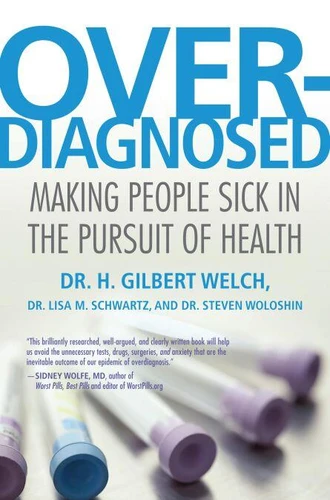
Overdiagnosed. Making People Sick in the Pursuit of Health
Par : , ,Formats :
Disponible dans votre compte client Decitre ou Furet du Nord dès validation de votre commande. Le format ePub protégé est :
- Compatible avec une lecture sur My Vivlio (smartphone, tablette, ordinateur)
- Compatible avec une lecture sur liseuses Vivlio
- Pour les liseuses autres que Vivlio, vous devez utiliser le logiciel Adobe Digital Edition. Non compatible avec la lecture sur les liseuses Kindle, Remarkable et Sony
- Non compatible avec un achat hors France métropolitaine
 , qui est-ce ?
Notre partenaire de plateforme de lecture numérique où vous retrouverez l'ensemble de vos ebooks gratuitement
Pour en savoir plus sur nos ebooks, consultez notre aide en ligne ici
C'est si simple ! Lisez votre ebook avec l'app Vivlio sur votre tablette, mobile ou ordinateur :

- Nombre de pages248
- FormatePub
- ISBN978-0-8070-2201-6
- EAN9780807022016
- Date de parution18/01/2011
- Protection num.Adobe DRM
- Taille3 Mo
- Infos supplémentairesepub
- ÉditeurBeacon Press
Résumé
A nationally recognized expert offers a searing exposé of Big Pharma and the American healthcare system's zeal for excessive medical testing. More screening doesn't lead to better health-but can turn healthy people into patients. Going against the conventional wisdom reinforced by the medical establishment and Big Pharma that more screening is the best preventative medicine, Dr. Gilbert Welch builds a compelling counterargument that what we need are fewer, not more, diagnoses.
Documenting the excesses of American medical practice that labels far too many of us as sick, Welch examines the social, ethical, and economic ramifications of a health-care system that unnecessarily diagnoses and treats patients, most of whom will not benefit from treatment, might be harmed by it, and would arguably be better off without screening. Drawing on 25 years of medical practice and research on the effects of medical testing, Welch explains in a straightforward, jargon-free style how the cutoffs for treating a person with "abnormal" test results have been drastically lowered just when technological advances have allowed us to see more and more "abnormalities, " many of which will pose fewer health complications than the procedures that ostensibly cure them.
Citing studies that show that 10% of 2, 000 healthy people were found to have had silent strokes, and that well over half of men over age sixty have traces of prostate cancer but no impairment, Welch reveals overdiagnosis to be rampant for numerous conditions and diseases, including diabetes, high cholesterol, osteoporosis, gallstones, abdominal aortic aneuryisms, blood clots, as well as skin, prostate, breast, and lung cancers.
With genetic and prenatal screening now common, patients are being diagnosed not with disease but with "pre-disease" or for being at "high risk" of developing disease. Revealing the economic and medical forces that contribute to overdiagnosis, Welch makes a reasoned call for change that would save us from countless unneeded surgeries, excessive worry, and exorbitant costs, all while maintaining a balanced view of both the potential benefits and harms of diagnosis.
Drawing on data, clinical studies, and anecdotes from his own practice, Welch builds a solid, accessible case against the belief that more screening always improves health care.
Documenting the excesses of American medical practice that labels far too many of us as sick, Welch examines the social, ethical, and economic ramifications of a health-care system that unnecessarily diagnoses and treats patients, most of whom will not benefit from treatment, might be harmed by it, and would arguably be better off without screening. Drawing on 25 years of medical practice and research on the effects of medical testing, Welch explains in a straightforward, jargon-free style how the cutoffs for treating a person with "abnormal" test results have been drastically lowered just when technological advances have allowed us to see more and more "abnormalities, " many of which will pose fewer health complications than the procedures that ostensibly cure them.
Citing studies that show that 10% of 2, 000 healthy people were found to have had silent strokes, and that well over half of men over age sixty have traces of prostate cancer but no impairment, Welch reveals overdiagnosis to be rampant for numerous conditions and diseases, including diabetes, high cholesterol, osteoporosis, gallstones, abdominal aortic aneuryisms, blood clots, as well as skin, prostate, breast, and lung cancers.
With genetic and prenatal screening now common, patients are being diagnosed not with disease but with "pre-disease" or for being at "high risk" of developing disease. Revealing the economic and medical forces that contribute to overdiagnosis, Welch makes a reasoned call for change that would save us from countless unneeded surgeries, excessive worry, and exorbitant costs, all while maintaining a balanced view of both the potential benefits and harms of diagnosis.
Drawing on data, clinical studies, and anecdotes from his own practice, Welch builds a solid, accessible case against the belief that more screening always improves health care.