Nouveauté
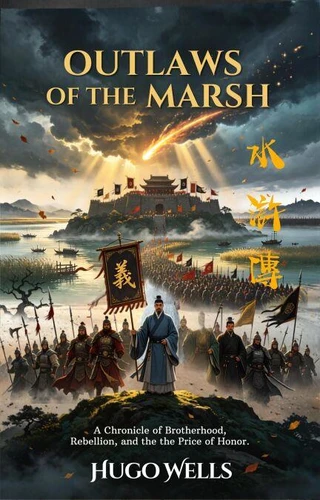
Outlaws of the Marsh. The Four Great Classical Novels of Chinese literature, #3
Par :Formats :
Disponible dans votre compte client Decitre ou Furet du Nord dès validation de votre commande. Le format ePub protégé est :
- Compatible avec une lecture sur My Vivlio (smartphone, tablette, ordinateur)
- Compatible avec une lecture sur liseuses Vivlio
- Pour les liseuses autres que Vivlio, vous devez utiliser le logiciel Adobe Digital Edition. Non compatible avec la lecture sur les liseuses Kindle, Remarkable et Sony
- Non compatible avec un achat hors France métropolitaine
 , qui est-ce ?
Notre partenaire de plateforme de lecture numérique où vous retrouverez l'ensemble de vos ebooks gratuitement
Pour en savoir plus sur nos ebooks, consultez notre aide en ligne ici
C'est si simple ! Lisez votre ebook avec l'app Vivlio sur votre tablette, mobile ou ordinateur :

- FormatePub
- ISBN8224843251
- EAN9798224843251
- Date de parution02/07/2026
- Protection num.Adobe DRM
- Infos supplémentairesepub
- ÉditeurDraft2Digital
Résumé
In the north-eastern corner of China, where the Yellow River sprawls across the plain like a wounded dragon, there lies a place called the Liangshan Marsh. It is not a beautiful place. Not in the way that mountains are beautiful, or rivers, or the gardens of the wealthy. It is a place of reeds and mud, of stagnant water and twisted trees, of fog that rises from the marsh like the breath of a sleeping beast.
It is a place that seems to exist outside the world, a place where the laws of men do not reach. And it is a place that has swallowed empires. For centuries, the Liangshan Marsh was a refuge for the desperate, the hunted, the broken. Farmers who had lost their land to greedy landlords, soldiers who had been betrayed by their commanders, officials who had been framed by their rivals-they all found their way to the marsh.
They built forts of reeds and mud, lived on fish and wild game, and swore oaths of brotherhood that were stronger than any bond of blood. They were outlaws. They were rebels. They were the dregs of society, the refuse of a corrupt and failing empire. But they were also heroes. They fought for justice in a world that had forgotten the meaning of the word. They protected the weak, punished the wicked, and defied the powers that oppressed them.
They were thieves and murderers, yes-but they were also the closest thing to knights that China had ever produced. Their story is the story of Water Margin-or, as it is sometimes translated, Outlaws of the Marsh. The emperor of the Song Dynasty, a man of weak character and weaker judgment, has been deceived by a corrupt official. The official, Gao Qiu, is a man of low birth and lower morals who has risen to power through flattery and intrigue.
He has been given authority over the empire's military, and he has used that authority to persecute his enemies, enrich himself, and terrorize the people. Gao Qiu's cruelty is the spark that ignites the rebellion. One by one, the heroes of the story are driven to the marsh by his machinations. Lin Chong, a loyal and brave military instructor, is framed and exiled by Gao Qiu. Lu Junyi, a wealthy and generous merchant, is betrayed by his own servants.
Song Jiang, a minor official of impeccable character, is forced to become an outlaw after he kills his mistress to protect his reputation. They come to the marsh from all walks of life: farmers, soldiers, merchants, scholars, monks, and even former officials. They are united by their suffering and their determination to fight back. And they are led by Song Jiang, the "Timely Rain, " a man of such virtue and charisma that even his enemies are forced to respect him.
He is not the strongest of the outlaws, nor the smartest, nor the most skilled in combat. But he is the heart of the rebellion, the soul of the brotherhood, the man who holds the 108 heroes together through the darkest of times. The story is a story of good men who do bad things, and bad men who do good things. It is a story of loyalty and betrayal, of sacrifice and selfishness, of the struggle between duty and desire.
It is a story of men who fight for justice, only to discover that justice is a dream that can never be fully realized. The 108 heroes of Liangshan Marsh are not just comrades. They are brothers, bound by oaths that are stronger than blood. They share everything: their food, their weapons, their victories, and their defeats. They would die for each other without hesitation, and they have died for each other, again and again.
Their brotherhood is the heart of the novel, the reason it has endured for centuries. It is a testament to the power of human connection, the strength that can be found in unity, and the hope that even in the darkest of times, we are not alone.
It is a place that seems to exist outside the world, a place where the laws of men do not reach. And it is a place that has swallowed empires. For centuries, the Liangshan Marsh was a refuge for the desperate, the hunted, the broken. Farmers who had lost their land to greedy landlords, soldiers who had been betrayed by their commanders, officials who had been framed by their rivals-they all found their way to the marsh.
They built forts of reeds and mud, lived on fish and wild game, and swore oaths of brotherhood that were stronger than any bond of blood. They were outlaws. They were rebels. They were the dregs of society, the refuse of a corrupt and failing empire. But they were also heroes. They fought for justice in a world that had forgotten the meaning of the word. They protected the weak, punished the wicked, and defied the powers that oppressed them.
They were thieves and murderers, yes-but they were also the closest thing to knights that China had ever produced. Their story is the story of Water Margin-or, as it is sometimes translated, Outlaws of the Marsh. The emperor of the Song Dynasty, a man of weak character and weaker judgment, has been deceived by a corrupt official. The official, Gao Qiu, is a man of low birth and lower morals who has risen to power through flattery and intrigue.
He has been given authority over the empire's military, and he has used that authority to persecute his enemies, enrich himself, and terrorize the people. Gao Qiu's cruelty is the spark that ignites the rebellion. One by one, the heroes of the story are driven to the marsh by his machinations. Lin Chong, a loyal and brave military instructor, is framed and exiled by Gao Qiu. Lu Junyi, a wealthy and generous merchant, is betrayed by his own servants.
Song Jiang, a minor official of impeccable character, is forced to become an outlaw after he kills his mistress to protect his reputation. They come to the marsh from all walks of life: farmers, soldiers, merchants, scholars, monks, and even former officials. They are united by their suffering and their determination to fight back. And they are led by Song Jiang, the "Timely Rain, " a man of such virtue and charisma that even his enemies are forced to respect him.
He is not the strongest of the outlaws, nor the smartest, nor the most skilled in combat. But he is the heart of the rebellion, the soul of the brotherhood, the man who holds the 108 heroes together through the darkest of times. The story is a story of good men who do bad things, and bad men who do good things. It is a story of loyalty and betrayal, of sacrifice and selfishness, of the struggle between duty and desire.
It is a story of men who fight for justice, only to discover that justice is a dream that can never be fully realized. The 108 heroes of Liangshan Marsh are not just comrades. They are brothers, bound by oaths that are stronger than blood. They share everything: their food, their weapons, their victories, and their defeats. They would die for each other without hesitation, and they have died for each other, again and again.
Their brotherhood is the heart of the novel, the reason it has endured for centuries. It is a testament to the power of human connection, the strength that can be found in unity, and the hope that even in the darkest of times, we are not alone.
A propos de Hugo Wells
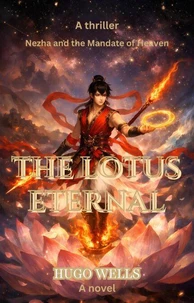
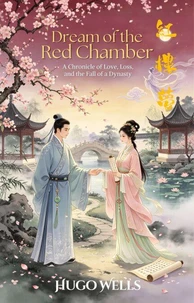
1,49 €
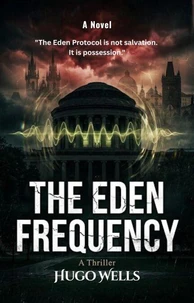
The Eden Frequency
E-book
1,49 €
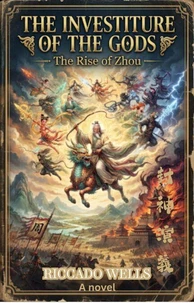
1,49 €
The Whispering House
E-book
1,49 €
The Ghost in the Machine
E-book
1,49 €