SOLDES
Jusqu'à -70% sur une sélection d'articles*

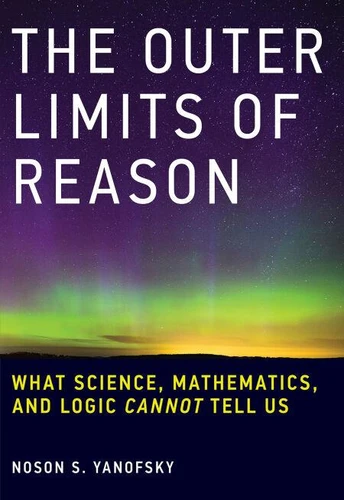
Outer Limits of Reason
Par :Formats :
Disponible dans votre compte client Decitre ou Furet du Nord dès validation de votre commande. Le format ePub protégé est :
- Compatible avec une lecture sur My Vivlio (smartphone, tablette, ordinateur)
- Compatible avec une lecture sur liseuses Vivlio
- Pour les liseuses autres que Vivlio, vous devez utiliser le logiciel Adobe Digital Edition. Non compatible avec la lecture sur les liseuses Kindle, Remarkable et Sony
- Non compatible avec un achat hors France métropolitaine
 , qui est-ce ?
Notre partenaire de plateforme de lecture numérique où vous retrouverez l'ensemble de vos ebooks gratuitement
Pour en savoir plus sur nos ebooks, consultez notre aide en ligne ici
C'est si simple ! Lisez votre ebook avec l'app Vivlio sur votre tablette, mobile ou ordinateur :

- Nombre de pages428
- FormatePub
- ISBN978-0-262-31678-1
- EAN9780262316781
- Date de parution23/08/2013
- Protection num.Adobe DRM
- Taille5 Mo
- Infos supplémentairesepub
- ÉditeurThe MIT Press
Résumé
This exploration of the scientific limits of knowledge challenges our deep-seated beliefs about our universe, our rationality, and ourselves."A must-read for anyone studying information science." -Publishers Weekly, starred reviewMany books explain what is known about the universe. This book investigates what cannot be known. Rather than exploring the amazing facts that science, mathematics, and reason have revealed to us, this work studies what science, mathematics, and reason tell us cannot be revealed.
In The Outer Limits of Reason, Noson Yanofsky considers what cannot be predicted, described, or known, and what will never be understood. He discusses the limitations of computers, physics, logic, and our own intuitions about the world-including our ideas about space, time, and motion, and the complex relationship between the knower and the known. Yanofsky describes simple tasks that would take computers trillions of centuries to complete and other problems that computers can never solve:.
Perfectly formed English sentences that make no sense. Different levels of infinity. The bizarre world of the quantum. The relevance of relativity theory. The causes of chaos theory. Math problems that cannot be solved by normal means. Statements that are true but cannot be provenMoving from the concrete to the abstract, from problems of everyday language to straightforward philosophical questions to the formalities of physics and mathematics, Yanofsky demonstrates a myriad of unsolvable problems and paradoxes.
Exploring the various limitations of our knowledge, he shows that many of these limitations have a similar pattern and that by investigating these patterns, we can better understand the structure and limitations of reason itself. Yanofsky even attempts to look beyond the borders of reason to see what, if anything, is out there.
In The Outer Limits of Reason, Noson Yanofsky considers what cannot be predicted, described, or known, and what will never be understood. He discusses the limitations of computers, physics, logic, and our own intuitions about the world-including our ideas about space, time, and motion, and the complex relationship between the knower and the known. Yanofsky describes simple tasks that would take computers trillions of centuries to complete and other problems that computers can never solve:.
Perfectly formed English sentences that make no sense. Different levels of infinity. The bizarre world of the quantum. The relevance of relativity theory. The causes of chaos theory. Math problems that cannot be solved by normal means. Statements that are true but cannot be provenMoving from the concrete to the abstract, from problems of everyday language to straightforward philosophical questions to the formalities of physics and mathematics, Yanofsky demonstrates a myriad of unsolvable problems and paradoxes.
Exploring the various limitations of our knowledge, he shows that many of these limitations have a similar pattern and that by investigating these patterns, we can better understand the structure and limitations of reason itself. Yanofsky even attempts to look beyond the borders of reason to see what, if anything, is out there.