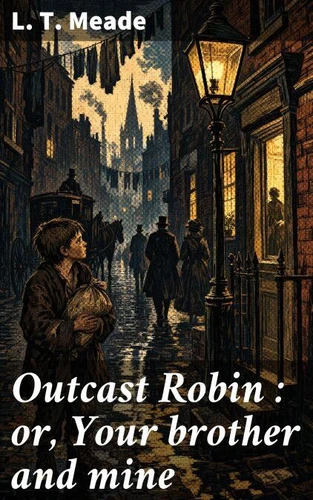
Outcast Robin : or, Your brother and mine. A cry from the great city
Par :Formats :
Disponible dans votre compte client Decitre ou Furet du Nord dès validation de votre commande. Le format ePub est :
- Compatible avec une lecture sur My Vivlio (smartphone, tablette, ordinateur)
- Compatible avec une lecture sur liseuses Vivlio
- Pour les liseuses autres que Vivlio, vous devez utiliser le logiciel Adobe Digital Edition. Non compatible avec la lecture sur les liseuses Kindle, Remarkable et Sony
 , qui est-ce ?
Notre partenaire de plateforme de lecture numérique où vous retrouverez l'ensemble de vos ebooks gratuitement
Pour en savoir plus sur nos ebooks, consultez notre aide en ligne ici
C'est si simple ! Lisez votre ebook avec l'app Vivlio sur votre tablette, mobile ou ordinateur :

- Nombre de pages75
- FormatePub
- ISBN859-65--4790266-9
- EAN8596547902669
- Date de parution28/06/2026
- Protection num.Digital Watermarking
- Taille2 Mo
- Infos supplémentairesepub
- ÉditeurGOOD PRESS
Résumé
L. T. Meade's Outcast Robin: or, Your Brother and Mine: a Cry from the Great City is a socially engaged late-Victorian novel that turns its gaze toward urban deprivation, moral neglect, and the precarious lives of children in the modern metropolis. Combining melodramatic plotting with reformist purpose, Meade frames Robin's story as both narrative and indictment, exposing the human cost of class indifference.
The book belongs to the tradition of Victorian social-problem fiction, echoing the humanitarian urgency found in writers concerned with the slums, child welfare, and the ethical obligations of Christian society. Its style is direct, sentimental, and earnest, designed to stir sympathy into conscience. L. T. Meade, one of the most prolific popular writers of her era, was especially attentive to the experiences of girls, children, and the vulnerable poor.
Irish-born and active in London literary culture, she wrote across genres, yet repeatedly returned to questions of moral education, domestic hardship, and social rescue. Such concerns clearly inform this novel's compassionate yet admonitory vision of city life. This is a valuable recommendation for readers interested in Victorian reform literature, urban fiction, and the history of social conscience in popular writing.
It offers not only a moving story but also a revealing window into how fiction sought to awaken responsibility toward the abandoned and unseen.
The book belongs to the tradition of Victorian social-problem fiction, echoing the humanitarian urgency found in writers concerned with the slums, child welfare, and the ethical obligations of Christian society. Its style is direct, sentimental, and earnest, designed to stir sympathy into conscience. L. T. Meade, one of the most prolific popular writers of her era, was especially attentive to the experiences of girls, children, and the vulnerable poor.
Irish-born and active in London literary culture, she wrote across genres, yet repeatedly returned to questions of moral education, domestic hardship, and social rescue. Such concerns clearly inform this novel's compassionate yet admonitory vision of city life. This is a valuable recommendation for readers interested in Victorian reform literature, urban fiction, and the history of social conscience in popular writing.
It offers not only a moving story but also a revealing window into how fiction sought to awaken responsibility toward the abandoned and unseen.
A propos de L. T. Meade

4,99 €

2,99 €
Madam Sara
E-book
1,99 €
How It All Came Round
E-book
1,99 €
Frances Kane's Fortune
E-book
1,99 €
The Girl and Her Fortune
E-book
0,99 €
The Rebel of the School
E-book
0,99 €



0,99 €