SOLDES
Jusqu'à -70% sur une sélection d'articles*

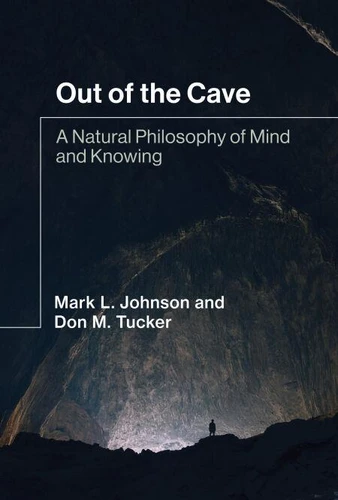
Out of the Cave. A Natural Philosophy of Mind and Knowing
Par : ,Formats :
Disponible dans votre compte client Decitre ou Furet du Nord dès validation de votre commande. Le format ePub protégé est :
- Compatible avec une lecture sur My Vivlio (smartphone, tablette, ordinateur)
- Compatible avec une lecture sur liseuses Vivlio
- Pour les liseuses autres que Vivlio, vous devez utiliser le logiciel Adobe Digital Edition. Non compatible avec la lecture sur les liseuses Kindle, Remarkable et Sony
- Non compatible avec un achat hors France métropolitaine
 , qui est-ce ?
Notre partenaire de plateforme de lecture numérique où vous retrouverez l'ensemble de vos ebooks gratuitement
Pour en savoir plus sur nos ebooks, consultez notre aide en ligne ici
C'est si simple ! Lisez votre ebook avec l'app Vivlio sur votre tablette, mobile ou ordinateur :

- Nombre de pages352
- FormatePub
- ISBN978-0-262-36724-0
- EAN9780262367240
- Date de parution17/08/2021
- Protection num.Adobe DRM
- Taille12 Mo
- Infos supplémentairesepub
- ÉditeurThe MIT Press
Résumé
From a philosopher and a neuropsychologist, a radical rethinking of certain traditional views about human cognition and behavior. Plato's Allegory of the Cave trapped us in the illusion that mind is separate from body and from the natural and physical world. Knowledge had to be eternal and absolute. Recent scientific advances, however, show that our bodies shape mind, thought, and language in a deep and pervasive way.
In Out of the Cave, Mark Johnson and Don Tucker--a philosopher and a neuropsychologist--propose a radical rethinking of certain traditional views about human cognition and behavior. They argue for a theory of knowing as embodied, embedded, enactive, and emotionally based. Knowing is an ongoing process--shaped by our deepest biological and cultural values. Johnson and Tucker describe a natural philosophy of mind that is emerging through the convergence of biology, psychology, computer science, and philosophy, and they explain recent research showing that all of our higher-level cognitive activities are rooted in our bodies through processes of perception, motive control of action, and feeling.
This developing natural philosophy of mind offers a psychological, philosophical, and neuroscientific account that is at once scientifically valid and subjectively meaningful--allowing us to know both ourselves and the world.
In Out of the Cave, Mark Johnson and Don Tucker--a philosopher and a neuropsychologist--propose a radical rethinking of certain traditional views about human cognition and behavior. They argue for a theory of knowing as embodied, embedded, enactive, and emotionally based. Knowing is an ongoing process--shaped by our deepest biological and cultural values. Johnson and Tucker describe a natural philosophy of mind that is emerging through the convergence of biology, psychology, computer science, and philosophy, and they explain recent research showing that all of our higher-level cognitive activities are rooted in our bodies through processes of perception, motive control of action, and feeling.
This developing natural philosophy of mind offers a psychological, philosophical, and neuroscientific account that is at once scientifically valid and subjectively meaningful--allowing us to know both ourselves and the world.