Max Tegmark is a professor of physics at MIT and president of the Future of Life Institute. He is the author of Our Mathematical Universe, and he has featured in dozens of science documentaries. His passion for ideas, adventure, and an inspiring future is infectious.
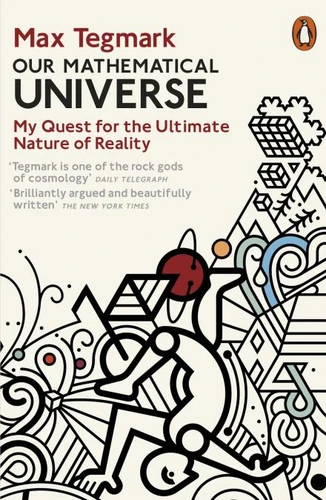
Our Mathematical Universe. My Quest for the Ultimate Nature of Reality
Par :Formats :
Disponible dans votre compte client Decitre ou Furet du Nord dès validation de votre commande. Le format ePub protégé est :
- Compatible avec une lecture sur My Vivlio (smartphone, tablette, ordinateur)
- Compatible avec une lecture sur liseuses Vivlio
- Pour les liseuses autres que Vivlio, vous devez utiliser le logiciel Adobe Digital Edition. Non compatible avec la lecture sur les liseuses Kindle, Remarkable et Sony
- Non compatible avec un achat hors France métropolitaine
 , qui est-ce ?
Notre partenaire de plateforme de lecture numérique où vous retrouverez l'ensemble de vos ebooks gratuitement
Pour en savoir plus sur nos ebooks, consultez notre aide en ligne ici
C'est si simple ! Lisez votre ebook avec l'app Vivlio sur votre tablette, mobile ou ordinateur :

- Nombre de pages336
- FormatePub
- ISBN978-0-14-197014-1
- EAN9780141970141
- Date de parution07/01/2014
- Protection num.Adobe DRM
- Infos supplémentairesepub
- ÉditeurPENGUIN
Résumé
Max Tegmark leads us on an astonishing journey through past, present, and future, and through the physics, astronomy, and mathematics that are the foundation of his work, most particularly his hypothesis that our physical reality is a mathematical structure and his theory of the ultimate multiverse. In a dazzling combination of both popular and groundbreaking science, he not only helps us grasp his often mind-boggling theories, but he also shares with us some of the often surprising triumphs and disappointments that have shaped his life as a scientist.
Fascinating from first to last - here is a book for the full science-reading spectrum. Max Tegmark is author or co-author of more than 200 technical papers, twelve of which have been cited more than 500 times. He has featured in dozens of science documentaries, and his work with the SDSS collaboration on galaxy clustering shared the first prize in Science magazine's "Breakthrough of the Year: 2003".
He holds a Ph. D from the University of California, Berkeley, and is a physics professor at MIT.
Fascinating from first to last - here is a book for the full science-reading spectrum. Max Tegmark is author or co-author of more than 200 technical papers, twelve of which have been cited more than 500 times. He has featured in dozens of science documentaries, and his work with the SDSS collaboration on galaxy clustering shared the first prize in Science magazine's "Breakthrough of the Year: 2003".
He holds a Ph. D from the University of California, Berkeley, and is a physics professor at MIT.