
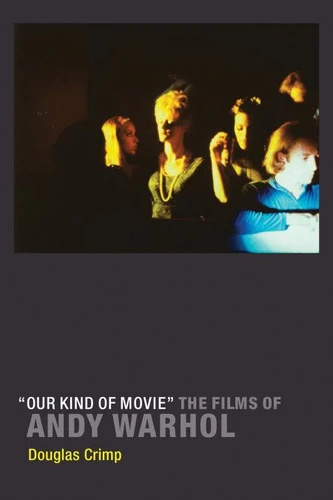
" Our Kind of Movie". The Films of Andy Warhol
Par :Formats :
Disponible dans votre compte client Decitre ou Furet du Nord dès validation de votre commande. Le format ePub protégé est :
- Compatible avec une lecture sur My Vivlio (smartphone, tablette, ordinateur)
- Compatible avec une lecture sur liseuses Vivlio
- Pour les liseuses autres que Vivlio, vous devez utiliser le logiciel Adobe Digital Edition. Non compatible avec la lecture sur les liseuses Kindle, Remarkable et Sony
- Non compatible avec un achat hors France métropolitaine
 , qui est-ce ?
Notre partenaire de plateforme de lecture numérique où vous retrouverez l'ensemble de vos ebooks gratuitement
Pour en savoir plus sur nos ebooks, consultez notre aide en ligne ici
C'est si simple ! Lisez votre ebook avec l'app Vivlio sur votre tablette, mobile ou ordinateur :

- Nombre de pages192
- FormatePub
- ISBN978-0-262-31526-5
- EAN9780262315265
- Date de parution02/03/2012
- Protection num.Adobe DRM
- Taille4 Mo
- Infos supplémentairesepub
- ÉditeurThe MIT Press
Résumé
A celebrated writer on contemporary art and queer culture argues that Andy Warhol's films enable us to see differently, and to see a different world."We didn't think of our movies as underground or commercial or art or porn; they were a little of all of those, but ultimately they were just 'our kind of movie.'"-Andy WarholAndy Warhol was a remarkably prolific filmmaker, creating more than 100 movies and nearly 500 of the film portraits known as Screen Tests.
And yet relatively little has been written about this body of work. Warhol withdrew his films from circulation in the early 1970s and it was only after his death in 1987 that they began to be restored and shown again. With Our Kind of Movie Douglas Crimp offers the first single-authored book about the full range of Andy Warhol's films in forty years-and the first since the films were put back into circulation.
In six essays, Crimp examines individual films, including Blow Job, Screen Test No. 2, and Warhol's cinematic masterpiece The Chelsea Girls (perhaps the most commercially successful avant-garde film of all time), as well as groups of films related thematically or otherwise-films of seductions in confined places, films with scenarios by Ridiculous Theater playwright Ronald Tavel. Crimp argues that Warhol's films make visible new, queer forms of sociality.
Crimp does not view these films as cinéma-vérité documents of Warhol's milieu, or as camera-abetted voyeurism, but rather as exemplifying Warhol's inventive cinema techniques, his collaborative working methods, and his superstars' unique capabilities. Thus, if Warhol makes visible new social relations, Crimp writes, that visibility is inextricable from his making a new kind of cinema. In Our Kind of Movie Crimp shows how Warhol's films allow us to see against the grain-to see differently and to see a different world, a world of difference.
And yet relatively little has been written about this body of work. Warhol withdrew his films from circulation in the early 1970s and it was only after his death in 1987 that they began to be restored and shown again. With Our Kind of Movie Douglas Crimp offers the first single-authored book about the full range of Andy Warhol's films in forty years-and the first since the films were put back into circulation.
In six essays, Crimp examines individual films, including Blow Job, Screen Test No. 2, and Warhol's cinematic masterpiece The Chelsea Girls (perhaps the most commercially successful avant-garde film of all time), as well as groups of films related thematically or otherwise-films of seductions in confined places, films with scenarios by Ridiculous Theater playwright Ronald Tavel. Crimp argues that Warhol's films make visible new, queer forms of sociality.
Crimp does not view these films as cinéma-vérité documents of Warhol's milieu, or as camera-abetted voyeurism, but rather as exemplifying Warhol's inventive cinema techniques, his collaborative working methods, and his superstars' unique capabilities. Thus, if Warhol makes visible new social relations, Crimp writes, that visibility is inextricable from his making a new kind of cinema. In Our Kind of Movie Crimp shows how Warhol's films allow us to see against the grain-to see differently and to see a different world, a world of difference.